Loading page
Laser marking
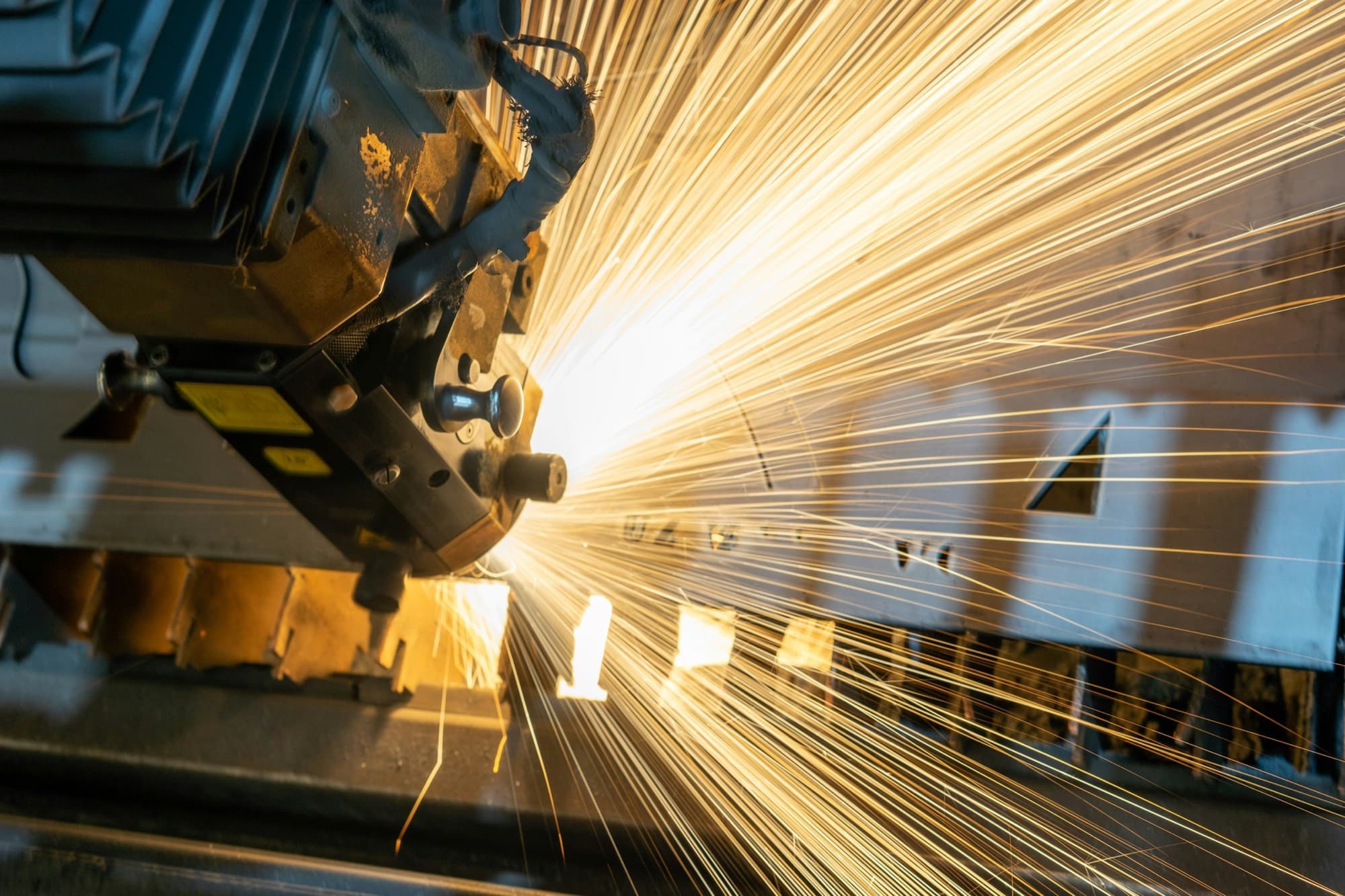
Laser marking uses a focused fiber, UV or CO2 laser to write permanent text, logos, serial numbers and 2D Data Matrix codes directly on parts. On metals it anneals, engraves or ablates; on anodized aluminum it removes dye to leave a bright mark; on plastics it foams or darkens the resin, often with a laser additive. It is fast, non-contact, and serializes each part from data.
- Applies to
- Stainless and carbon steel, aluminum (bare or anodized), titanium, brass, and laser-markable plastics
- Adds
- 1 days
- Cost
- Low

Colors
- Black anneal on stainless and titanium
- White or gray on anodized aluminum
- Dark or light contrast on plastics
Specs
| Mark types | Anneal (color change), engrave (material removal), ablate (coating removal), foam or carbonize (plastics) |
|---|---|
| Engrave depth | About 0.0005–0.005 in (13–130 µm) typical |
| Minimum character height | About 0.020 in (0.5 mm) |
| 2D codes | Data Matrix ECC 200, graded per ISO/IEC TR 29158 |
| Annealed marks on stainless | No material removal; smooth, cleanable surface |
| Serialization | Unique serial or lot codes from a data file |
Call out on the drawing
- MIL-STD-130 (UID marking)
- ISO/IEC 16022 (Data Matrix)
- ISO/IEC TR 29158 (direct part mark quality)
- FDA UDI direct marking (21 CFR 801.45)
Materials it suits
 Structural aluminum6061-T6
 Extrusion aluminum6063-T5
 Aerospace aluminum7075-T6
 Marine aluminum5052-H32
 Die-cast aluminumA380
 Mild steel1018
 Carbon steel1045
 Machining steel12L14
 Alloy steel4140
 Machining stainless303 SS
 Everyday stainless304 SS
 Marine stainless316 SS
 Magnetic stainless430 SS
 Hardened stainless17-4 PH
 Machining brassC360 brass
 Pure copperC110 copper
 TitaniumTi-6Al-4V
 ABS
ABS PolycarbonatePC
 PC/ABS
 NylonPA66
 Glass-filled nylonPA66-GF30
 Polyester (PBT)PBT
 AcrylicPMMA
 PEEK
PEEK
Questions
Laser engraving vs laser annealing?
Engraving removes material to make a recessed mark that survives wear and blasting. Annealing heats stainless or titanium to form a dark oxide with no material removal, keeping a smooth, cleanable surface for medical and food parts.
Can anodized aluminum be laser marked?
Yes. The laser removes dye and some oxide, leaving a white to gray mark on black or colored anodize. Mark after anodizing for best contrast.
Can plastics be laser marked?
Many can. ABS, PC, PBT, nylon and acetal mark well, especially with a laser-sensitive additive in the resin. Polypropylene and polyethylene usually need the additive. Specify it when the resin is ordered, not after molding.


Price it with this finish.
The builder adds lot charges, per-part cost and lead time for the finish you pick.