Loading page
Core line, represented 25+ years
Forging
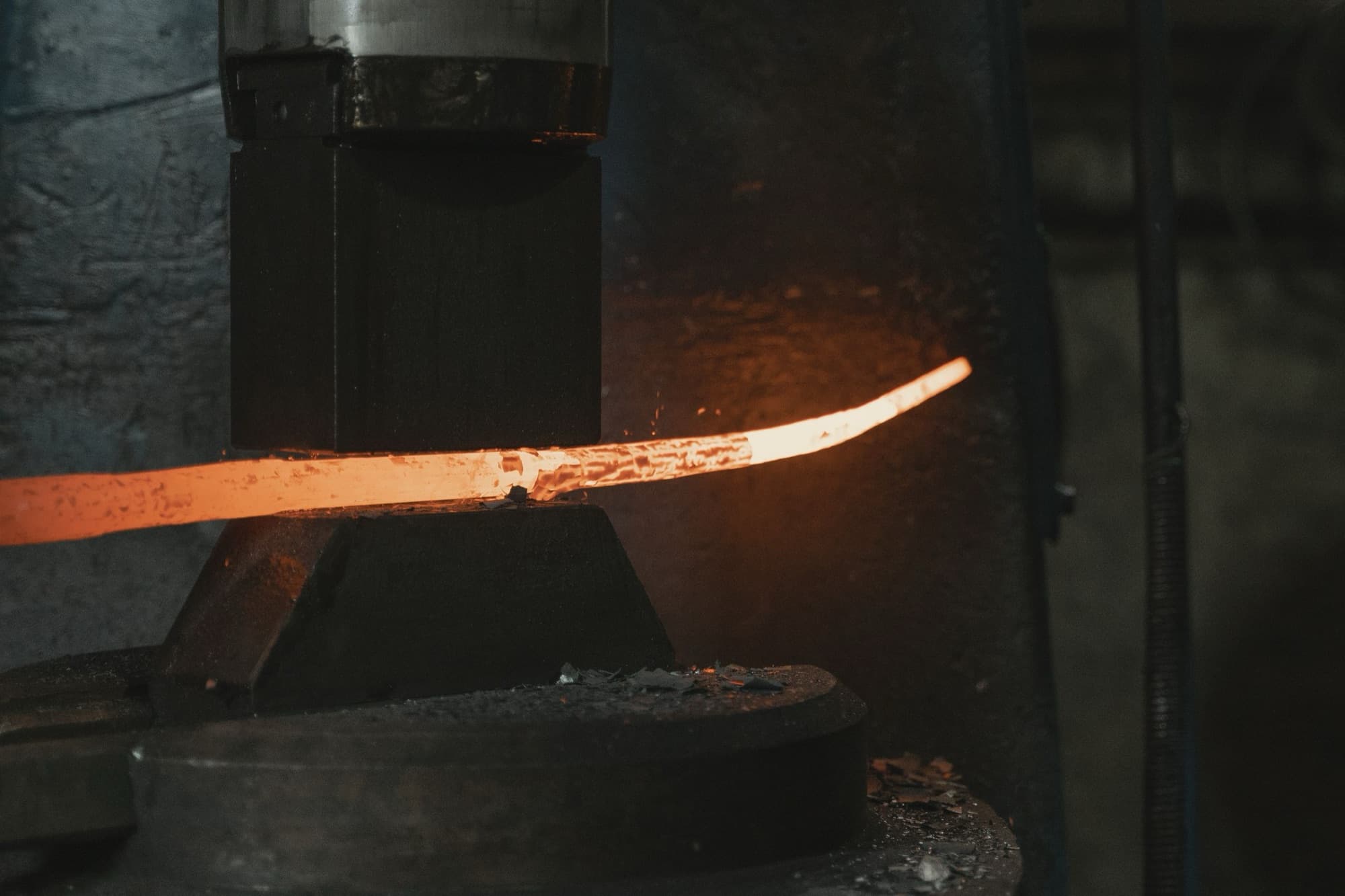
Forging is a process that shapes heated metal by pressing or hammering it between dies, which refines the grain and aligns it with the part's contour. Forged parts are typically stronger and more fatigue resistant than castings or parts machined from bar. Closed-die forging is economical from about 500 parts a year for levers, yokes, hubs, and hand tools.
Where it pays off
1101001k10k100k1M+
At a glance
Closed-die tooling pays back from several hundred to a few thousand parts a year. Open-die forging suits single large parts.
- As-forged tolerance
- ±0.010–0.030 in (±0.25–0.8 mm), plus die wear and mismatch allowances
- Machined tolerance
- ±0.001 in (±0.025 mm) or tighter on machined features
- Draft
- 5–7° typical for steel; 1–3° for aluminum and precision forgings
- Part weight
- Closed-die parts from about 0.5 lb to 100+ lb (0.2–45+ kg); open-die much larger
- Machining stock
- 0.060–0.125 in (1.5–3.2 mm) per machined surface typical
- Surface finish
- Ra about 125–250 µin (3.2–6.3 µm) after shot blast
- Forging temperature
- Steel about 2,100–2,300 °F (1,150–1,260 °C); aluminum 750–900 °F (400–480 °C)
- Tooling cost
- $5,000–$60,000 for closed-die tooling, depending on size and impressions
Lead time
- Tooling
- 6–12 weeks
- First article
- 2–4 weeks after tooling
- Production
- 4–10 weeks per release, including heat treat and machining
What would it cost?
The builder's estimator on a representative flanged bushing. Change a size, the quantity or the material and the price updates.
Flanged bushing · Forging
Order total $15,070
- Tooling
- $9,336
- one-time, spread over the order
- Piece price
- $2.01
- before setup + tooling
- Lead time
- 8–12 weeks
- to first production
Size
Drag a row to adjust · click to type
Body OD22.022.0 mm
Overall height18.018.0 mm
Flange OD34.034.0 mm
Quantity
Price per part falls as volume rises
Exact quantity25002500 pcs
Material
Design checks pass
Open in builderBudgetary estimate for a representative part. Firm quotes come from principals after drawing review.
How does it work?
6 steps from drawing to production parts.
- 1
Die design
The part is laid out with draft, a parting line, and machining stock. Blocker and finisher impressions are sunk in H13 or similar die steel.
- 2
Cut and heat
Bar is sawed to a calculated weight and heated by induction or furnace, to about 2,100–2,300 °F (1,150–1,260 °C) for steel.
- 3
Forge
The billet is pressed or hammered through blocker and finisher impressions until the cavity fills. Excess metal squeezes out as flash.
- 4
Trim and pierce
Flash is trimmed and holes are pierced in a trim press, hot or after cooling.
- 5
Heat treat and clean
Parts are normalized, quenched and tempered, or annealed. Shot blasting removes scale.
- 6
Machine and inspect
Bores, faces, and threads are machined. Critical parts are often checked by magnetic particle inspection.
When is forging the right call?
Best for
- Load-bearing levers, yokes, hubs, arms, and hooks
- Parts that must survive fatigue, shock, or impact
- Hand tools, fittings, and valve bodies
- Near-net blanks that cut machining time and scrap from bar
- Carbon, alloy, and stainless steel, aluminum, and titanium parts
Pick something else when
- Thin-walled, complex housings: use die casting
- Small, lightly loaded round parts: screw machining is cheaper
- Prototype quantities under about 100 parts: machine from bar with CNC machining
- Flat parts from sheet: use metal stamping
Materials
9 materials principals run in forging. Pick one for design rules, finishes and an estimate in that material.


Design rules that keep the price down
5–7° external and 7–10° internal for steel
Add draft
Draft lets the part release from the die; less draft needs precision forging.
Fillets at least 0.125 in (3 mm); corners at least 0.060 in (1.5 mm) on small parts
Use generous fillets and corners
Sharp fillets fold metal into laps and crack dies.
Webs at least 0.125–0.250 in (3–6 mm), thicker for large plan areas
Avoid thin webs
Thin webs cool quickly and need very high tonnage to fill.
Place it on the largest cross section, in one plane if possible
Keep the parting line simple
A flat parting line simplifies dies and trimming and reduces mismatch.
0.060–0.125 in (1.5–3.2 mm) per machined surface
Allow machining stock
Covers scale, decarburization, mismatch, and die wear.
Call out as-forged limits and put datums on machined features
Separate forged and machined tolerances
As-forged surfaces cannot hold machined tolerances.
Orient the part so grain flow follows the main load path
Align grain with load
Grain flow aligned with stress improves fatigue life.
What drives the cost?
In order of impact.
- 1
Material and weight
Forgings are bought by the pound including flash, which often adds 20–40% over net weight.
- 2
Die cost and complexity
Deep ribs, thin webs, and multiple impressions add die cost and shorten die life.
- 3
Alloy
Stainless, titanium, and high-alloy steels need more forging pressure, cost more per pound, and wear dies faster.
- 4
Heat treatment and testing
Quench and temper, mechanical testing, and magnetic particle or ultrasonic inspection add cost and time.
- 5
Machining
Most forgings are machined on functional surfaces. Closer forging tolerances reduce machining but cost more in the die.
Variants
- Closed-die (impression-die) forging
- Heated metal fills a shaped cavity between two dies. The standard route for production parts.
- Open-die forging
- Metal is worked between flat or simple dies without full enclosure. Used for shafts, blocks, and large one-off parts.
- Cold forging and heading
- Metal is formed at room temperature for tight tolerances and good finish on bolts, pins, and small shafts.
- Warm forging
- Steel is forged at about 1,200–1,800 °F (650–980 °C), balancing cold-forging precision with hot-forging formability.
- Rolled rings
- A pierced preform is rolled into a weld-free ring for bearings, flanges, and gear blanks.



Forging questions
Are forgings stronger than castings?
Generally, yes. Forging closes internal voids and aligns grain flow with the part shape, giving higher fatigue and impact strength than a casting of the same alloy. Castings win on complex internal shapes and thin-walled parts.
How much do forging dies cost?
Closed-die tooling typically costs $5,000–$60,000, depending on part size, number of impressions, and trim tooling. Worn dies can often be resunk for less than a new set.
What is the minimum order for forgings?
Closed-die forgings usually make sense from about 500 parts a year, though some shops run a few hundred against existing dies. Open-die forging handles single pieces.
What tolerances can forging hold?
As-forged dimensions typically hold ±0.010–0.030 in (±0.25–0.8 mm), plus allowances for die wear and mismatch. Functional surfaces are machined afterward to ±0.001 in (±0.025 mm) or tighter.
What is the difference between hot and cold forging?
Hot forging heats steel to about 2,100–2,300 °F (1,150–1,260 °C) so it flows into complex shapes. Cold forging forms metal at room temperature for tighter tolerances and better surface finish, but it suits smaller, simpler shapes.
How long does it take to get forgings?
New closed-die tooling typically takes 6–12 weeks. Production runs usually take 4–10 weeks, including heat treat and machining.
Related processes
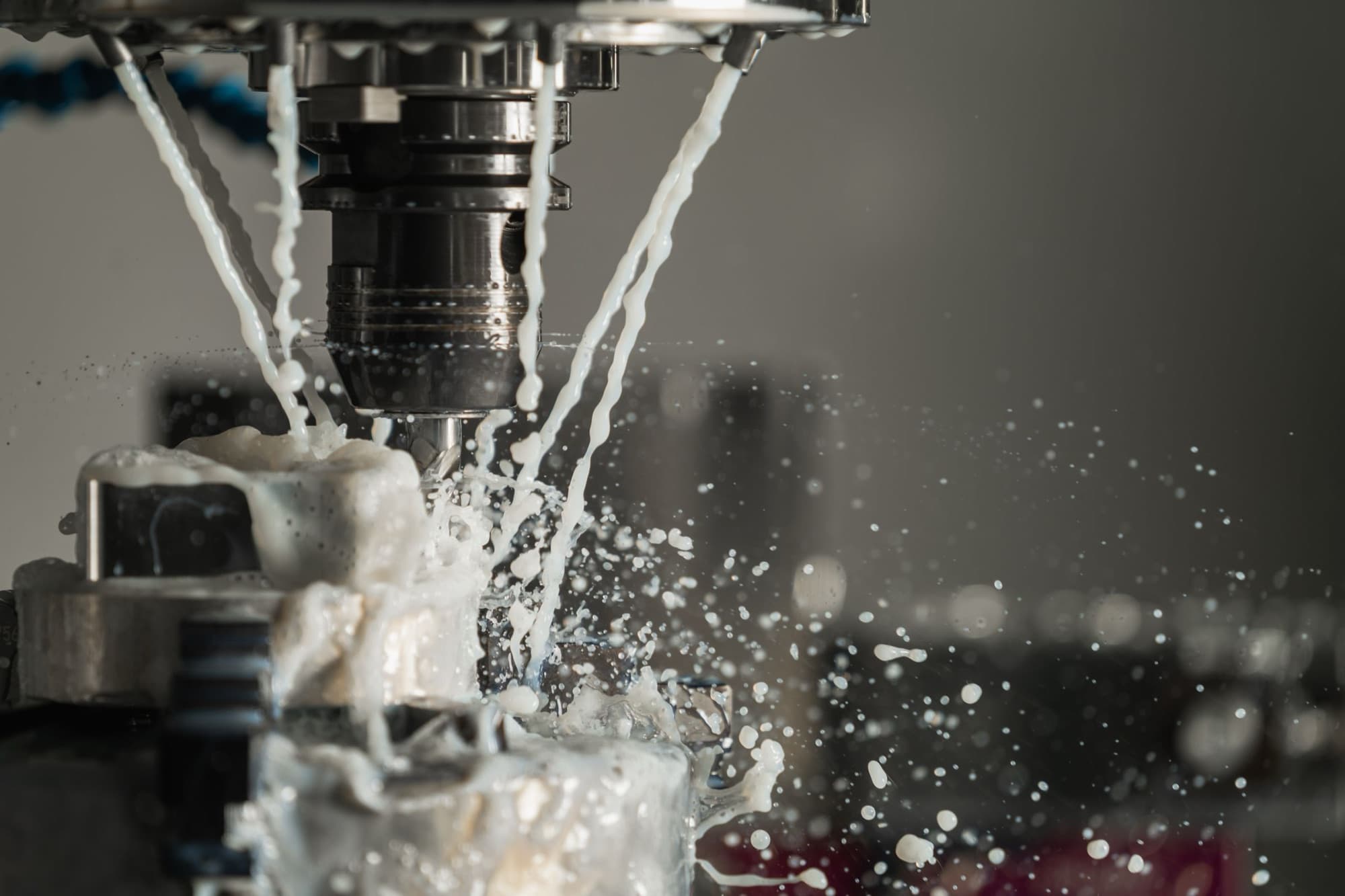 CNC machining
CNC milling, turning, and production sawing from bar, plate, castings, and forgings, from prototype to production.
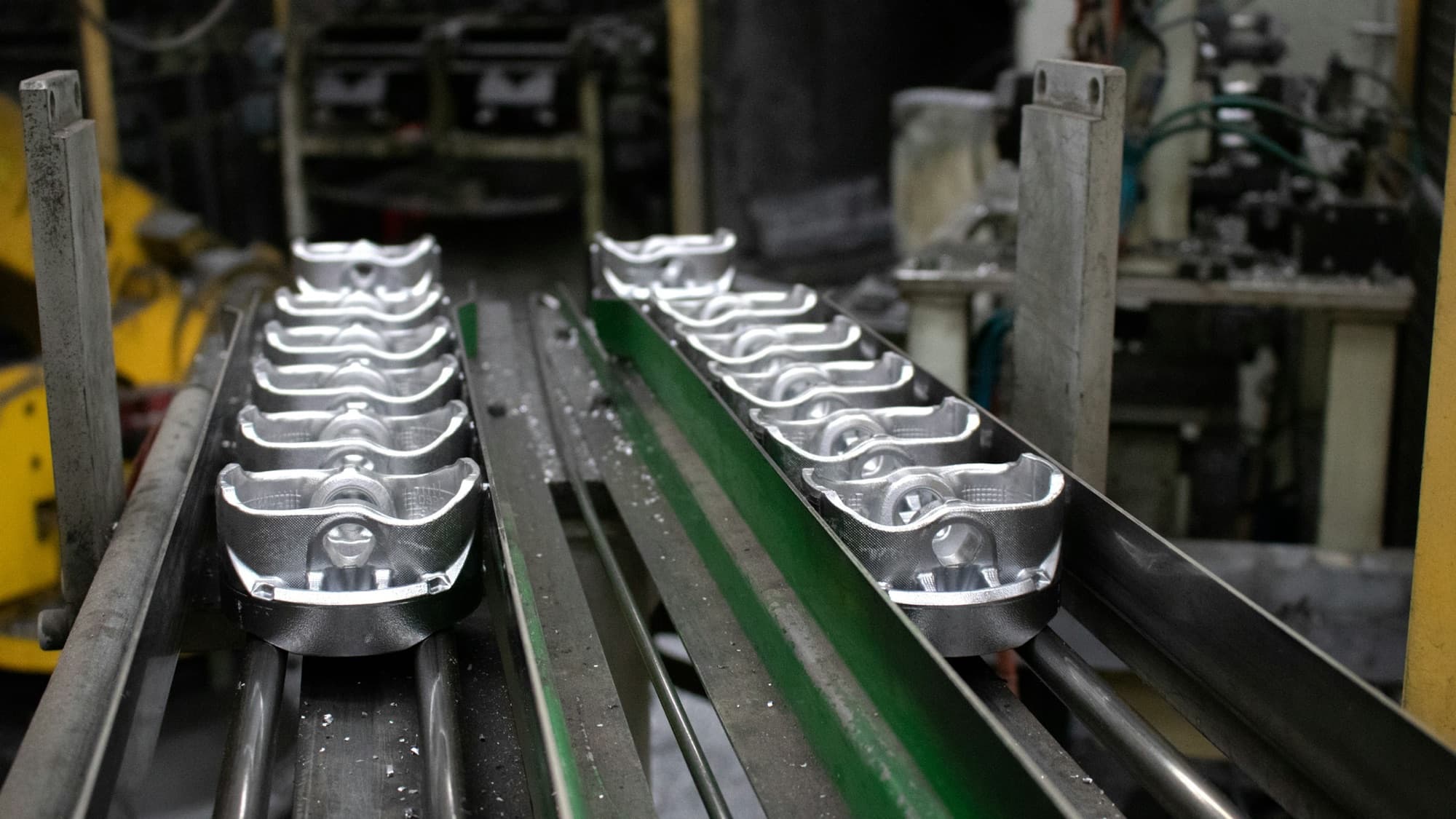 Die casting
Molten zinc or aluminum injected into steel dies at high pressure. Thin walls and net shape at 2,500+ parts a year.
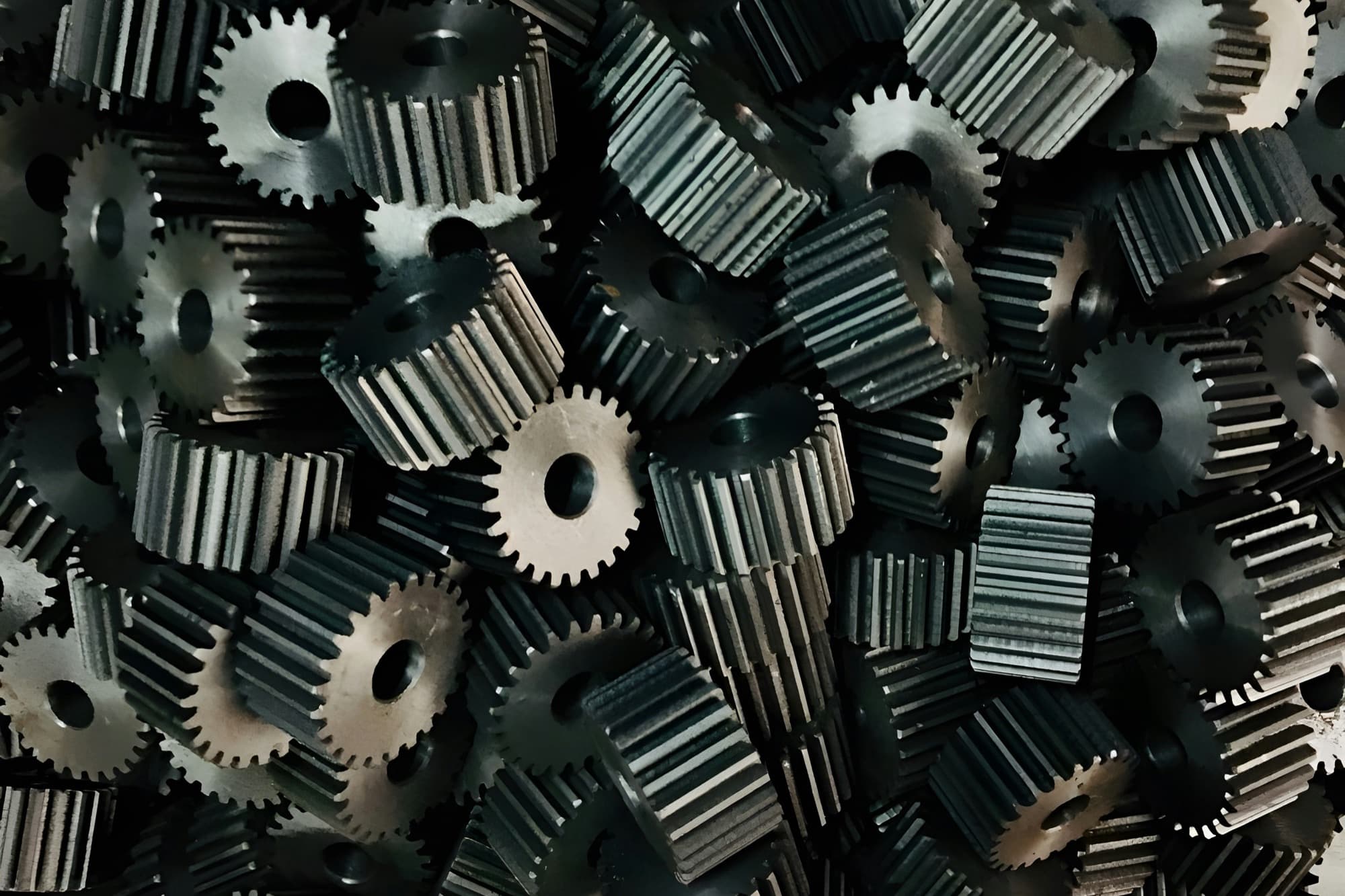 Powdered metal
Net-shape gears, bushings, and structural parts pressed from metal powder and sintered, with little or no machining.
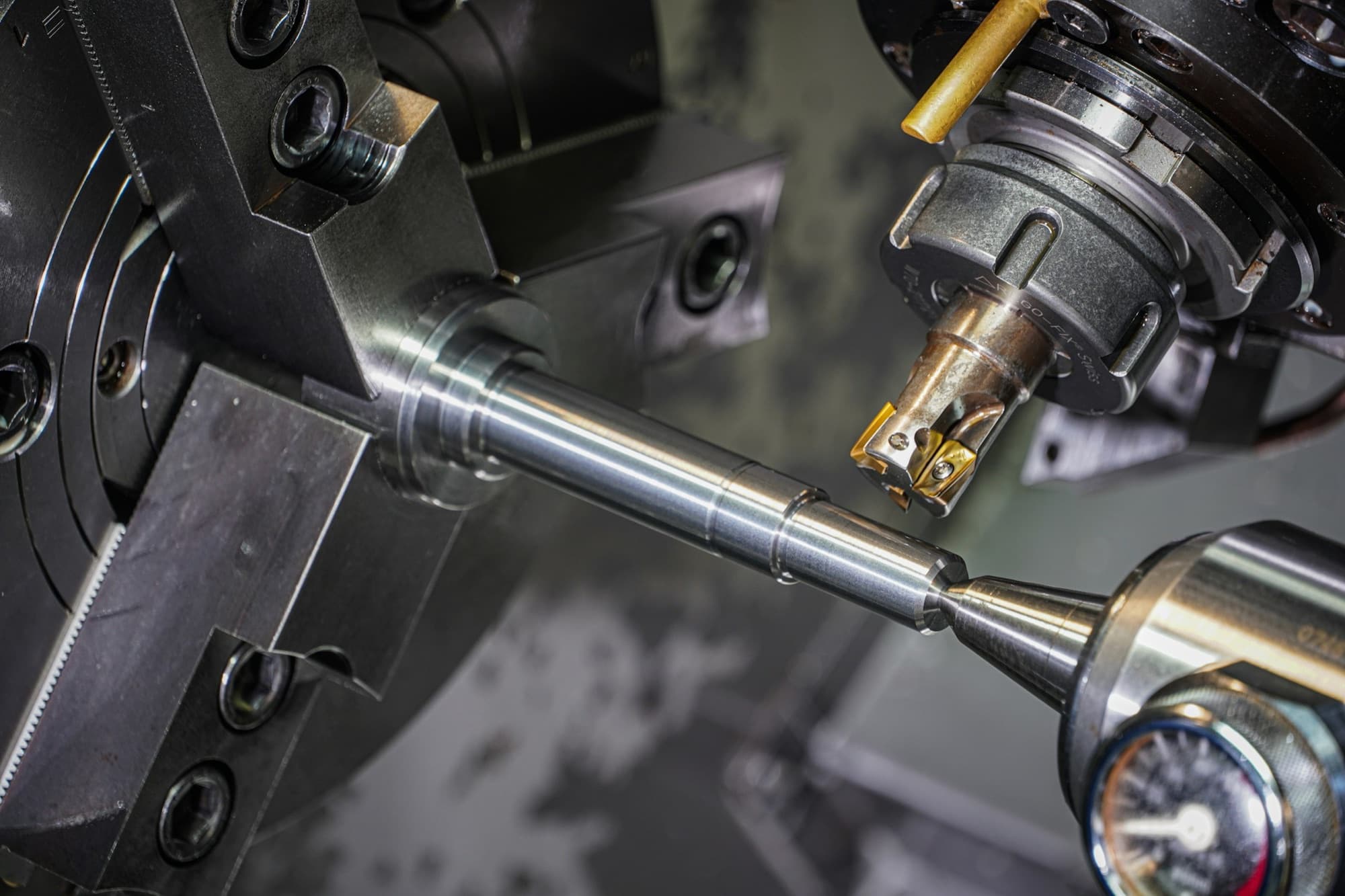 Screw machining
Turned pins, fittings, shafts, and bushings made from bar stock on multi-spindle and Swiss screw machines at volume.
Quote forging today.
Drop a STEP file for an instant estimate and DFM check. A rep routes the RFQ to principals who run this process every day.