Loading page
How do you reshore or nearshore production?
Reshoring moves production back to the US; nearshoring moves it to Mexico or Canada. Either way it is a supplier change: qualify the new source, build bridge inventory, move or rebuild the tools, pass a first article and a new PPAP, then run both sources until the new one holds rate. A realistic plan takes 6–9 months from decision to cutover.
How long does a production transfer take?
Six to nine months is realistic. The choice that shapes it: move the tools you have, or build new ones while the old source keeps shipping. Scrub the weeks to see what is happening and how many weeks of parts are on hand.
- Move tools
- 28–36 wk
- Build new
- 28–34 wk
- Bridge stock
- 12–20 wk
- New PPAP
- Required
Cutover about week 32
Typical 28–36 weeks. Cheapest in tooling, but for about 11 weeks nothing is being made: the line runs on bridge stock.
Week 14: ship tools 15 weeks of parts on hand.
Quote and qualify the new source
wk 0–4
Weeks 0 to 4. RFQ with drawings, tool photos, the tool list and PPAP history. The principal reviews the tools on paper first.Build bridge inventory
wk 2–12
Weeks 2 to 12. Last runs at the old source: demand for the whole gap plus safety stock, shipped by ocean.Release, inspect and crate tools
wk 10–13
Weeks 10 to 13. Condition report, spare inserts and last-shot parts packed with each tool. Title documents in hand before anything moves.Ship tools
wk 13–19
Weeks 13 to 19. Door to door by ocean, customs included. Returning tools are imports and need an entry.Refurbish and adapt to presses
wk 19–22
Weeks 19 to 22. Locating ring, clamp slots, water fittings, ejector pattern, hot runner connectors. Worn steel repaired.Tryout and T1 samples
wk 22–24
Weeks 22 to 24. Process set on the new press; first shots measured against the drawing.First article and PPAP
wk 24–28
Weeks 24 to 28. Full layout, capability study and a new submission, because the plant changed.Ramp and rebuild safety stock
wk 28–32
Weeks 28 to 32. Run at rate, then refill the buffer the bridge used up. Cutover at the end.Weeks of parts on hand
bridge + safety stock
08162432
What are the steps to move production?
Eight steps, in order. The two that sink transfers are the third and the fourth: title to the tools and enough bridge stock.
- 1
Decide on landed cost
You and your rep
Re-cost the part at today's duty, freight and carrying cost against domestic and Mexican quotes. Move when the landed gap, lead time or risk justifies the project, not on piece price alone.
- 2
Qualify the new source
New principal
RFQ with the drawing, 3D model, tool list, tool photos and PPAP history. The principal checks press size, capability and capacity, and quotes the refurbishment.
- 3
Secure the tools
You and the old supplier
Confirm title: the tooling agreement, the paid invoices and an asset tag on each tool. Agree a release date and the last-time buy in writing before announcing the move.
- 4
Build bridge inventory
Old supplier
Enough parts to cover the whole gap, from the last shot at the old plant to approved parts from the new one, plus safety stock. Typically 12–20 weeks of demand for a tool transfer.
- 5
Transfer or rebuild the tooling
Both suppliers
Crate and ship with a condition report and last-shot parts, or build new tools while the old source keeps running. Returning tools are imports and need a customs entry.
- 6
Tryout and first article
New principal
Adapt the tool to the press, set the process, shoot T1 samples and measure every characteristic against the drawing.
- 7
Re-submit PPAP
New principal
A change of manufacturing site requires a new submission under the AIAG manual, usually Level 3: dimensional results, capability, PFMEA, control plan and warrant.
- 8
Dual run, then cut over
Both, with your rep
Run the new source at rate while the bridge covers any shortfall. Cut over when it holds rate and quality for several lots, then rebuild safety stock.
What transfers with the tools, and what doesn't?
The steel moves. Much of what made it run well stays behind.
ItemTransfersWhat to do
Tools you hold title to
TransfersYes
What to doTooling agreement, paid invoices and asset tags. Photos of each tool before it ships.
Tools you paid for without clear title
TransfersMaybe
What to doPaid-for is not the same as owned. Settle title in writing before the supplier learns it is losing the work.
Drawings and 3D CAD
TransfersYes, if you hold the latest
What to doOffshore suppliers often keep their own revised drawings. Ask for the as-built model and every approved deviation.
Process settings
TransfersRarely
What to doTemperatures, pressures, cycle times and tricks live with the old plant. Ask for the setup sheets; expect to re-develop the process.
Material specifications
TransfersPartly
What to doMaterials called out to GB, JIS or supplier grades need an ASTM or UNS equivalent approved before tryout.
Fixtures, gauges and end-of-arm tooling
TransfersOnly if listed
What to doPut them on the tool list and the release. They are often forgotten and take weeks to rebuild.
PPAP and approvals
TransfersNo
What to doApproval belongs to the old site. A new site means a new first article and a new PPAP submission.
Sub-suppliers
TransfersNo
What to doResin, platers, heat treaters and packaging come from the new principal's own supply base and must be approved again.
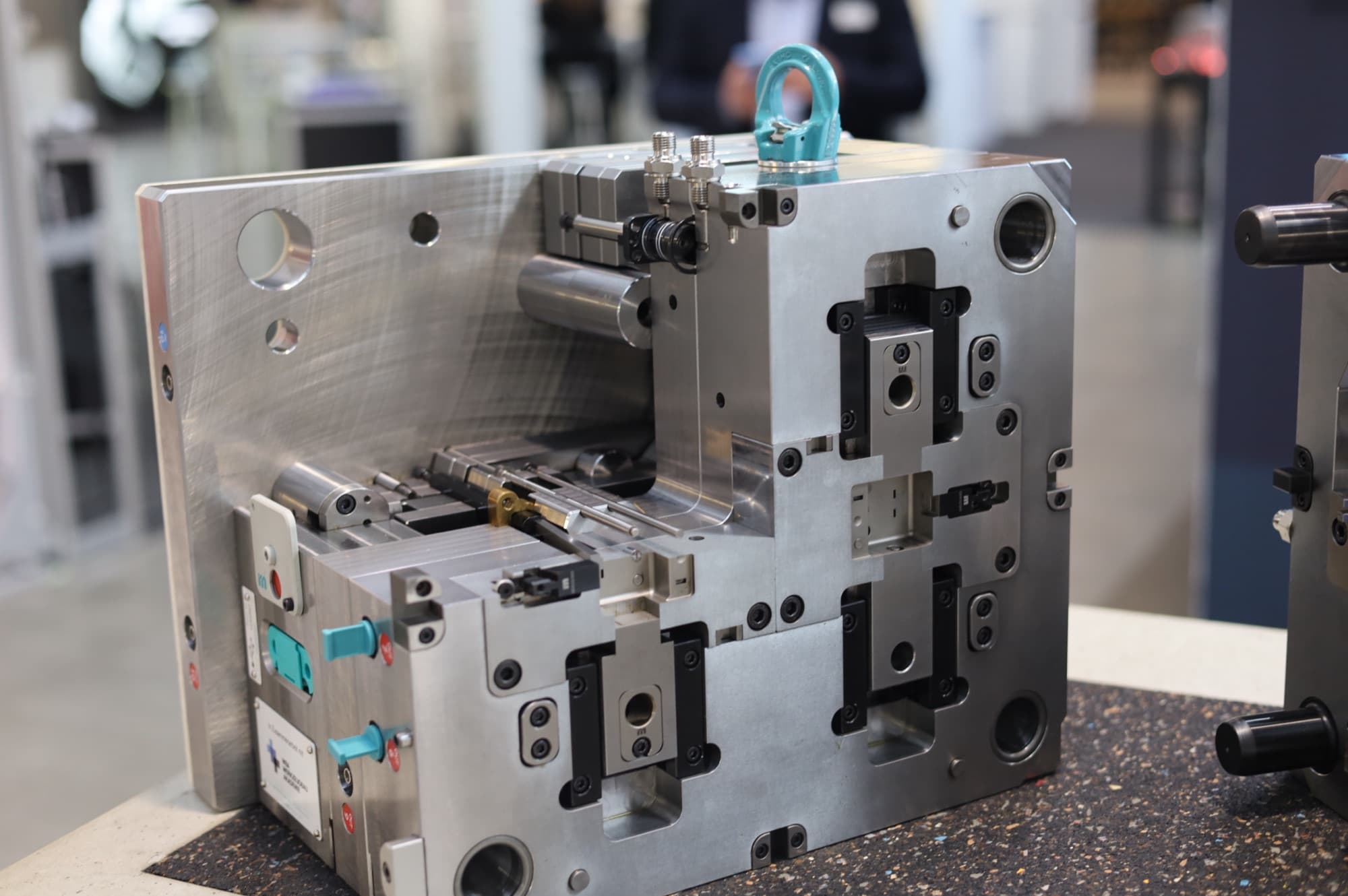
What goes in the crate?
A condition report with photos, the last 5–10 shots from the old press, spare inserts and wear parts, the setup sheet, and the maintenance log. The last-shot parts show the new plant exactly what the tool made before it moved.
Glossary: bridge tooling, T1 sample, safety stock
Will an offshore tool run in a US press?
Usually, after adaptation. Plan for it in the refurbishment quote rather than finding out at tryout.
- Locating ring and sprue
- Metric rings and sprue radii on Asian molds often don't match US platens. Adapter rings and a new sprue bushing are usual, and cheap.
- Platen, tie bars and clamp
- The mold must fit between the tie bars and match the clamp tonnage and shut height of the new press. Clamp slots or a new clamp plate may be needed.
- Ejector pattern
- Knockout rod locations differ by press brand and standard. Couplers or a new ejector plate fix it.
- Water and hydraulics
- Metric or BSP water fittings and core-pull cylinders are swapped to the plant's standard, then every circuit is flow-tested.
- Hot runner
- Controller connectors, zone wiring and thermocouple types differ. Budget a controller or rewiring and a full heater check.
- Die casting and stamping
- Die casting dies must match the machine's shot sleeve and platen. Stamping dies must match the press shut height, bed and feed line.
Send the tool drawings or photos of both mold halves, the plate sizes and the press it runs in today with the RFQ. The new principal can quote the adaptation before the tool ships.
What can go wrong in a transfer?
Five risks cause most delays. Each has an early signal.
RiskEarly signalHow to limit it
The old supplier holds the tools
Early signalSlow answers on release dates; new charges appear
How to limit itSettle title and the release in writing first. Pay the final tooling invoice only against release.
The tool arrives worn or damaged
Early signalNo recent maintenance records; flash or short shots on the last lots
How to limit itCondition report and last-shot parts before crating. Budget refurbishment; quote a new tool as the fallback.
Bridge stock runs out
Early signalTryout slips; first article fails a dimension
How to limit itSize the bridge for the gap plus 4–6 weeks. Watch weeks of cover every week, not the plan date.
Quality drops on the last-time buy
Early signalAn old supplier losing the work loses interest
How to limit itPre-shipment inspection on every final lot, and a hold on the final payment until they pass.
The domestic price surprises
Early signalQuote based on the old drawing, not the as-built part
How to limit itQuote from the as-built model with the real cycle time and material. Compare landed cost, not unit price.
Should production move to the US or to Mexico?
Both shorten the pipeline from months to days. They differ in labor cost, duty rules and what each does best.
United StatesMexico
Transit to a US plant
United StatesDays by truck
Mexico1–7 days by truck, border crossing included
Duty
United StatesNone
MexicoNone for goods that qualify under USMCA rules of origin; the normal rate for goods that don't
Labor cost
United StatesHighest
MexicoWell below the US, above most of Asia
Engineering changes
United StatesFastest: same time zone, a drive or short flight away
MexicoClose: US time zones, short flights, many plants run by US-trained teams
Strong in
United StatesLow volume, regulated, fast-changing, automated high-volume work
MexicoAutomotive, appliances, electrical, die casting, machining, labor-heavy assembly
Watch for
United StatesCapacity in some processes, labor availability
MexicoRules of origin on Asian inputs, border delays, capacity in the busiest industrial regions
Before moving to Mexico, check the USMCA rule of origin for your HTS code. A part made in Mexico from Asian inputs may not qualify. See tariff management.
Questions buyers ask about reshoring
How long does it take to reshore a part?
Typically 6–9 months from decision to cutover for a molded, cast or stamped part. Moving existing tools takes about 28–36 weeks including ocean transit and refurbishment; building new tools takes about 28–34 weeks but lets the old source keep shipping. Simple machined parts with no dedicated tooling can move in 8–12 weeks.
Do I need a new PPAP when production moves?
Yes. The AIAG PPAP manual requires a new submission when production moves to a new site, when tooling is transferred or replaced, and after production has been inactive for 12 months or more. Level 3 is the default unless your customer says otherwise.
Should I move my existing tools or build new ones?
Move them when you own them, they are in good condition and the gap can be bridged with inventory. Build new when the tools are worn, built to a standard the new press can't run, or the supplier won't release them, and when you cannot afford a production gap. New tools cost more but keep the old source shipping.
How much bridge inventory do I need?
Enough to cover from the last shot at the old plant to approved production at the new one, plus safety stock. For a tool moved by ocean that is typically 12–20 weeks of demand. Size it for the slow case: a failed first article adds weeks.
Is reshoring more expensive?
The unit price usually is. Landed cost may not be once duty, ocean freight, 12–16 weeks of pipeline inventory and quality travel come off. Run both numbers on the landed cost model before deciding.
Can SSG help move production?
Yes. SSG routes the RFQ to domestic and Mexican principals qualified for the process, and your rep coordinates the transfer: tool list, last-time buy, first article and PPAP, and the cutover. The principals do the manufacturing and the approvals.
Quote the new source before you move a tool.
Send the drawing, the tool list and photos. SSG routes it to qualified US and Mexican principals, who quote the parts and the tool adaptation.