Loading page
Core line, represented 25+ years
Rubber extrusion and molding
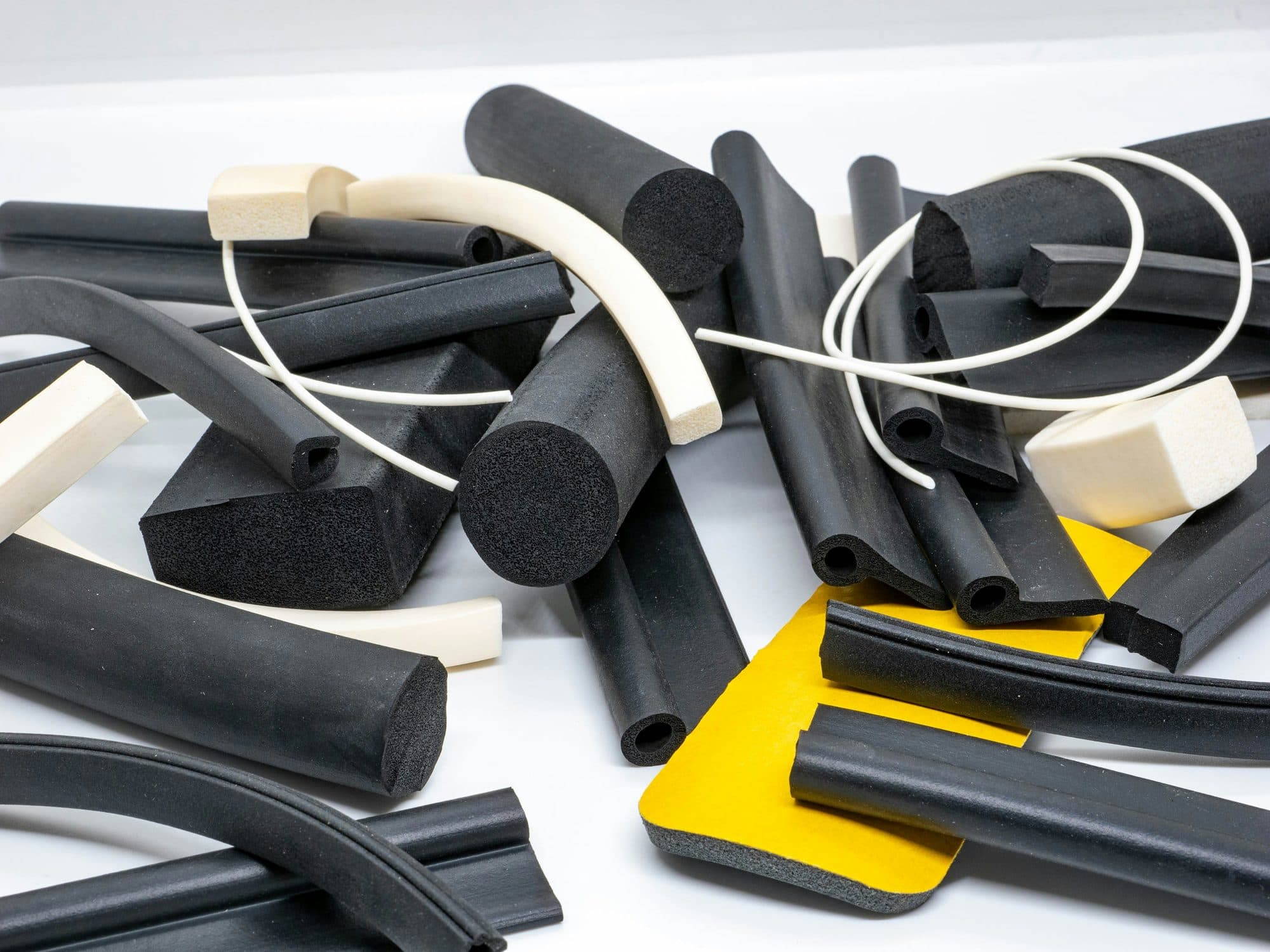
Rubber extrusion and molding is the shaping of uncured elastomer into continuous profiles or discrete parts, followed by heat curing (vulcanizing) to set final properties. Extrusion makes seals, tubing, and weatherstrip by the foot; compression, transfer, and injection molding make O-rings, grommets, boots, and gaskets. Typical hardness runs 30–90 Shore A in EPDM, silicone, nitrile, neoprene, and FKM.
Where it pays off
1101001k10k100k1M+
At a glance
Extrusions are quoted by the foot, often with run minimums of 500–2,000 ft. Molded parts become economical above a few thousand pieces.
- Hardness range
- 30–90 Shore A; standard tolerance ±5 points
- Extrusion tolerance
- ISO 3302-1 class E2 typical: ±0.010–0.020 in (±0.25–0.50 mm) on sections under 0.25 in (6 mm)
- Molded tolerance
- ISO 3302-1 class M2 typical: ±0.004–0.014 in (±0.10–0.35 mm) on features under 1 in (25 mm)
- Extrusion cross section
- About 0.060–6 in (1.5–150 mm) across
- Minimum wall
- About 0.030 in (0.8 mm)
- Service temperature
- EPDM −40 to 300 °F (−40 to 150 °C); silicone −75 to 450 °F (−60 to 230 °C); FKM −4 to 400 °F (−20 to 205 °C)
- Material callout
- ASTM D2000 / SAE J200 line callout
- Tooling cost
- Extrusion dies $500–$2,500; compression molds $2,000–$15,000; injection molds $10,000–$50,000+
Lead time
- Tooling
- 2–6 weeks
- First article
- 1–2 weeks after tooling
- Production
- 3–6 weeks per release
What would it cost?
The builder's estimator on a representative extruded seal. Change a size, the quantity or the material and the price updates.
Extruded seal · Rubber
Order total $7,662
- Tooling
- $750
- one-time, spread over the order
- Piece price
- $1.32
- before setup + tooling
- Lead time
- 3–4 weeks
- to first production
Size
Drag a row to adjust · click to type
Profile width / OD12.012.0 mm
Hollow / ID7.007.00 mm
Cut length900900 mm
Quantity
Price per part falls as volume rises
Exact quantity50005000 pcs
Material
Design checks pass
Open in builderBudgetary estimate for a representative part. Firm quotes come from principals after drawing review.
How does it work?
5 steps from drawing to production parts.
- 1
Compound selection
The polymer, fillers, and cure system are chosen for temperature, fluid exposure, and compression set. Hardness is specified in Shore A.
- 2
Tooling
An extrusion die is cut from steel plate for profiles, or a compression, transfer, or injection mold is machined for molded parts.
- 3
Forming
An extruder pushes compound through the die as a continuous profile. Molding presses fill cavities by compression, transfer, or injection.
- 4
Curing
Heat vulcanizes the rubber, in a salt bath, hot-air, or microwave line for extrusions or in heated molds for molded parts. Silicone and FKM often get an oven post-cure.
- 5
Finishing
Molded parts are deflashed by hand trimming or cryogenic tumbling. Extrusions are cut to length, spliced into rings, or fitted with adhesive tape.
When is rubber the right call?
Best for
- Seals, gaskets, O-rings, and weatherstrip
- Grommets, bumpers, boots, and bellows
- Continuous profiles, tubing, and cord cut to length or spliced
- Parts that must flex, seal, or damp vibration
- Rubber-to-metal bonded mounts and bushings
Pick something else when
- Rigid structural parts: use plastic injection molding
- Flat gaskets in modest quantities: die-cut or waterjet-cut sheet costs less than a mold
- Prototype quantities under about 50 parts: urethane casting or additive manufacturing is faster
Materials
6 materials principals run in rubber. Pick one for design rules, finishes and an estimate in that material.


Design rules that keep the price down
About 0.030 in (0.8 mm) minimum, with even thickness around the profile
Keep walls uniform
Uneven sections cure and swell at different rates and distort the profile.
15–30% compression for static seals; 10–20% for dynamic seals
Size seal squeeze
Too little squeeze leaks; too much causes compression set and extrusion.
Seal volume no more than about 85% of groove volume
Limit gland fill
Rubber is nearly incompressible, so an overfilled gland extrudes or cracks the seal as it swells or heats.
Inside corner radius at least 0.020 in (0.5 mm)
Radius corners
Sharp corners tear on demold and concentrate stress.
±5 Shore A points
Specify durometer tolerance
Tighter hardness control needs special compounding and testing.
Place flash and mismatch on non-functional surfaces
Keep parting lines off sealing faces
Flash on a seal lip creates a leak path.
Start at ISO 3302-1 E2 or M2
Choose the loosest workable tolerance class
Rubber shrinks about 1.5–4% depending on compound, so tight classes add cost fast.
What drives the cost?
In order of impact.
- 1
Compound
FKM and specialty silicones can cost 5–10× more per pound than EPDM. Specify the least demanding compound that meets temperature and fluid needs.
- 2
Tooling and cavitation
Extrusion dies are inexpensive. Molded parts carry mold cost that falls per part as cavity count rises.
- 3
Tolerance class
Tighter classes such as E1 and M1 need more die work, slower lines, and more inspection. Most seals function at E2 or M2.
- 4
Deflashing and trimming
Hand trimming is labor-heavy. Flashless tooling or cryogenic deflashing lowers cost at volume.
- 5
Secondary operations
Splicing, notching, adhesive backing, and bonding to metal inserts add labor to every part.
Variants
- Rubber extrusion
- Compound is pushed through a shaped die and cured continuously. Makes weatherstrip, tubing, cord, and profile seals.
- Compression molding
- A preform is placed in an open heated cavity and the mold closes to shape and cure it. Lowest mold cost; suits larger parts and lower volumes.
- Transfer molding
- Compound is forced from a pot into closed cavities. Handles inserts and tighter dimensions better than compression molding.
- Rubber injection molding
- Compound is injected into a closed, heated mold. Fastest cycles and least flash, with the highest tooling cost.
- Liquid silicone rubber (LSR) molding
- Two-part liquid silicone is injected into a heated mold in short cycles. Used for medical, food-contact, and precision seals.
- Rubber-to-metal bonding
- Rubber is molded onto a primed metal insert to make mounts, bushings, and dampers.



Rubber questions
What is the difference between EPDM, silicone, and Viton?
EPDM resists weather, ozone, and hot water to about 300 °F (150 °C) but swells in oil. Silicone handles −75 to 450 °F (−60 to 230 °C) and is common in food and medical use. FKM (Viton) resists fuels, oils, and many chemicals to about 400 °F (205 °C) at a much higher price.
What tolerances can rubber extrusions hold?
Most profiles are toleranced to ISO 3302-1 class E2, about ±0.010–0.020 in (±0.25–0.50 mm) on sections under 0.25 in (6 mm). Class E1 is tighter at added cost. Rubber shrinks and swells during cure, so machined-plastic tolerances are not realistic.
How much does a rubber mold cost?
Compression molds typically cost $2,000–$15,000. Rubber and LSR injection molds usually run $10,000–$50,000 or more, depending on cavity count. Extrusion dies are much cheaper, often $500–$2,500.
What durometer should I specify for a seal?
Most static seals and O-rings use 70 Shore A. Softer compounds (40–60 A) seal against rough or low-force surfaces, and harder compounds (80–90 A) resist extrusion under high pressure. Standard durometer tolerance is ±5 points.
What is the minimum order for custom rubber extrusions?
Many extruders set run minimums of about 500–2,000 ft or a minimum dollar charge per run. The die itself is inexpensive, so short runs are practical once the minimum is met.
Should I use rubber or TPE?
TPE molds like plastic on standard injection presses, with fast cycles and recyclable scrap. Thermoset rubbers such as EPDM and FKM hold up better to heat, compression set, and aggressive fluids. Choose TPE for grips and light-duty seals; choose rubber for long-term sealing under heat.
Related processes
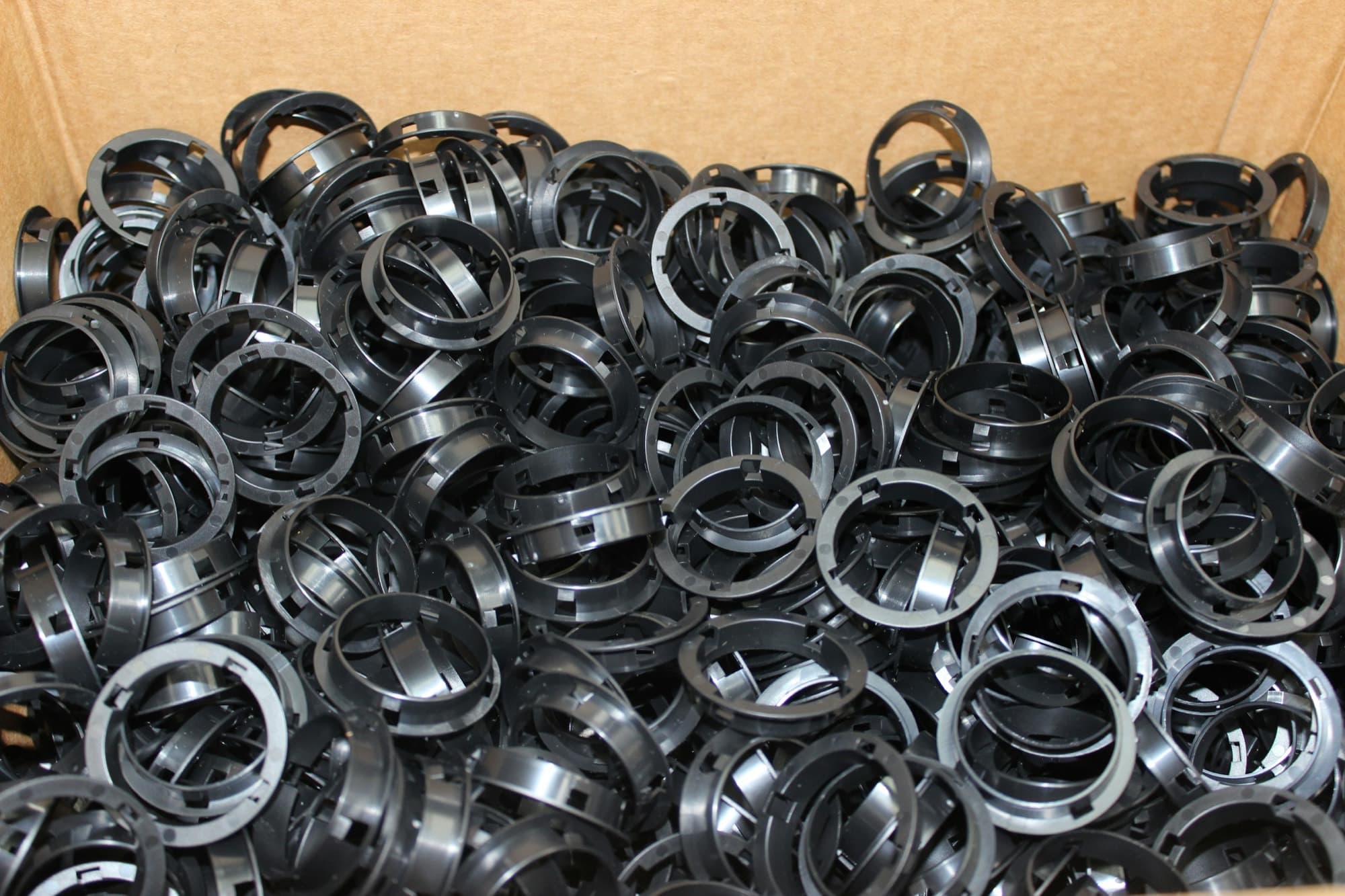 Injection molding
Molten thermoplastic injected into a steel or aluminum mold. Lowest piece price for plastic parts at 5,000+ a year.
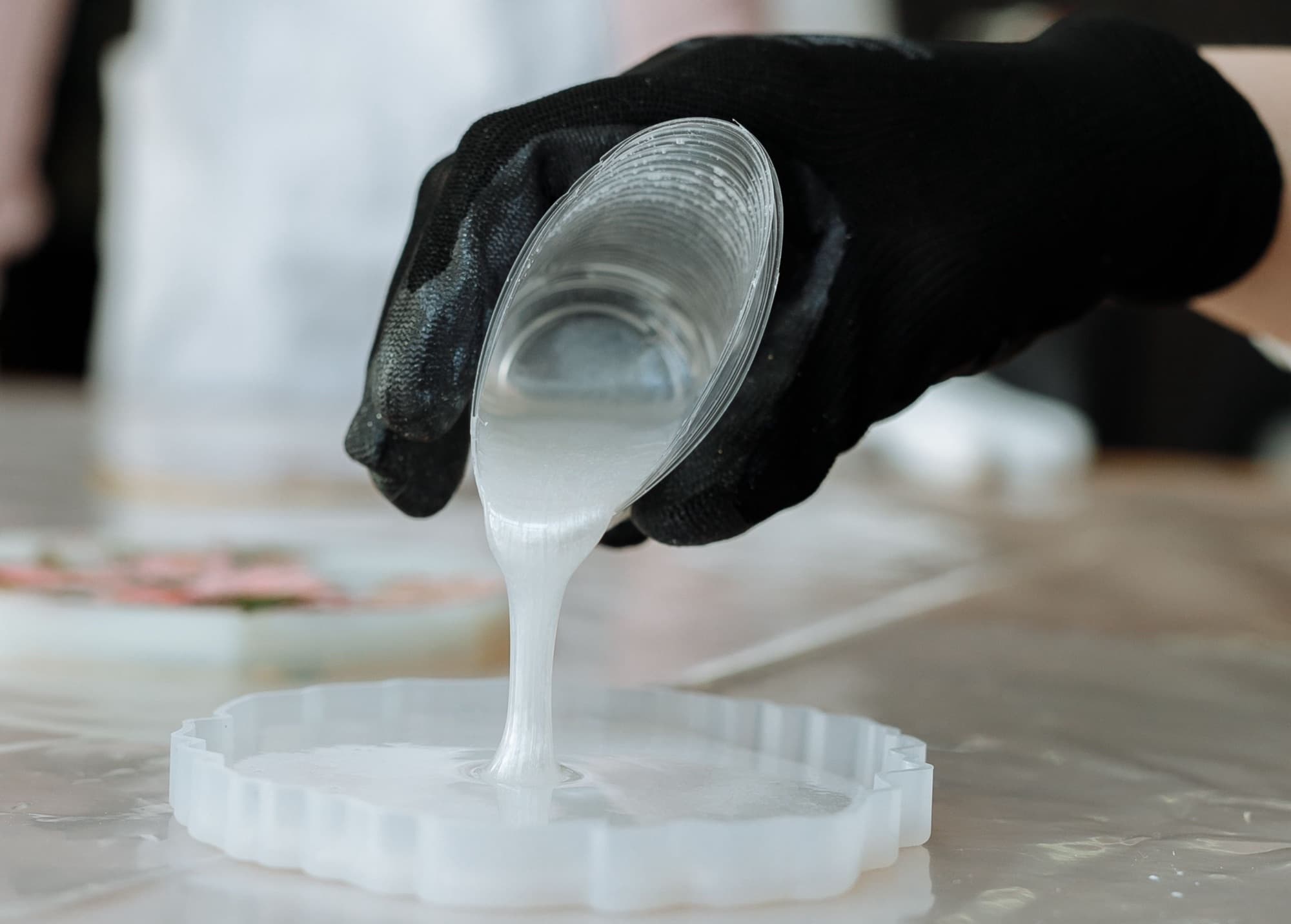 Urethane casting
Production-like plastic and rubber parts cast in silicone molds, typically 10–200 parts in one to two weeks.
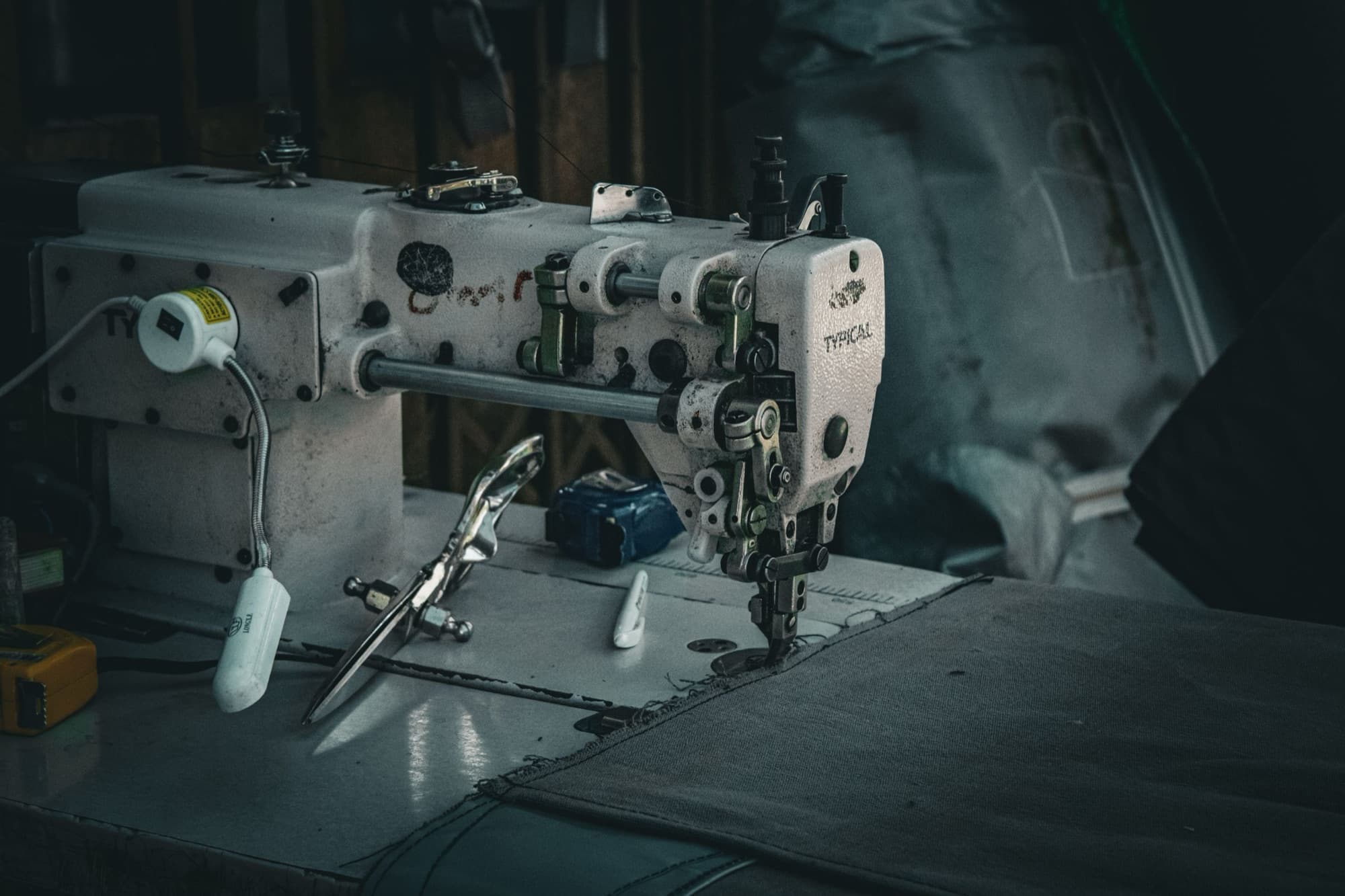 Soft goods
Cut-and-sewn covers, bags, cases, straps, cushions, and industrial textiles, from pattern development to production.
Quote rubber today.
Drop a STEP file for an instant estimate and DFM check. A rep routes the RFQ to principals who run this process every day.