Loading page
Low- to high-volume production: volume bands, tooling and price per part
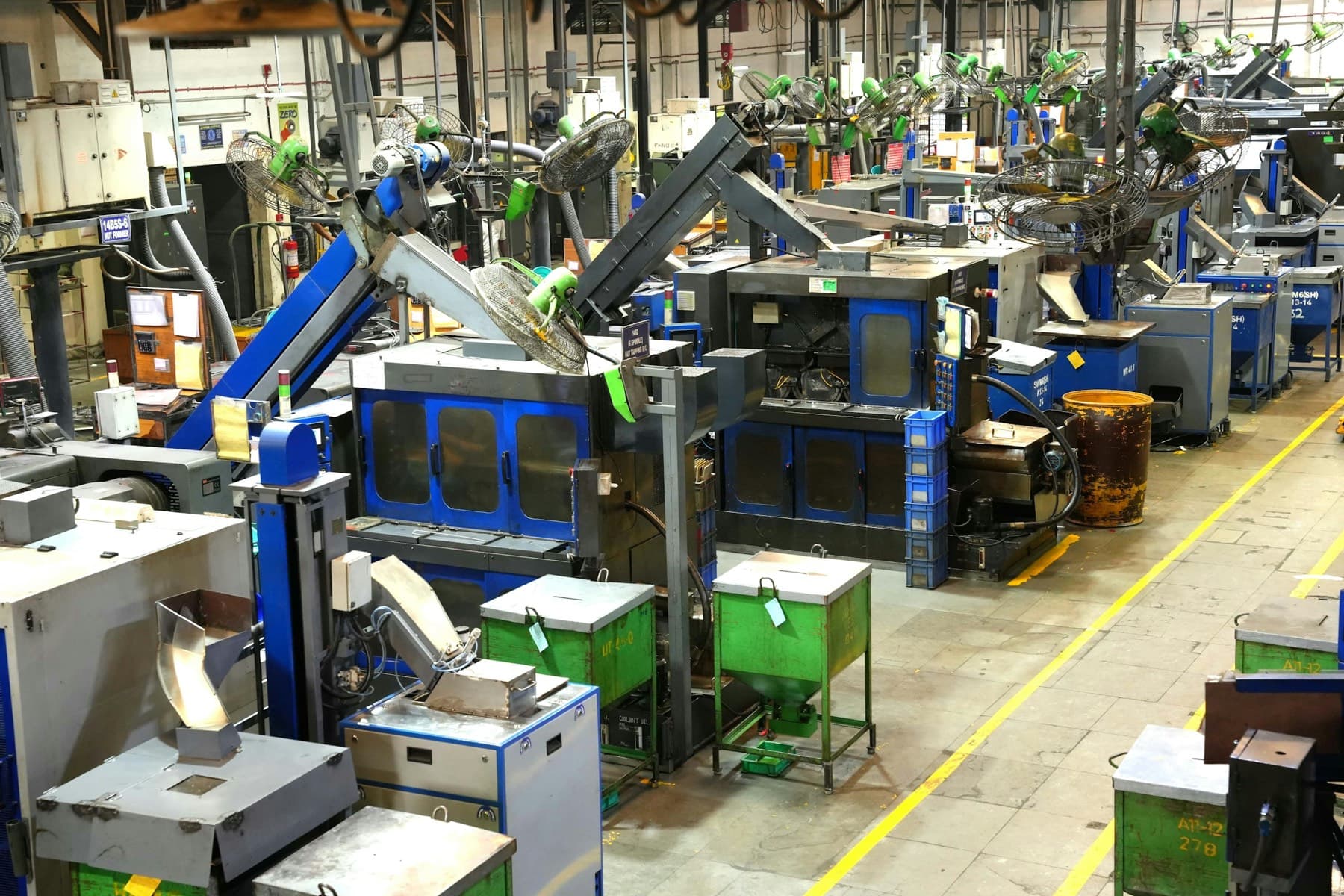
Production volume sets the process. Below about 1,000 parts a year, untooled processes like CNC machining and laser-cut sheet metal usually cost least. From about 1,000 to tens of thousands, short-run dies or aluminum molds pay back. At higher volumes, progressive dies and multi-cavity steel molds drive the price per part lowest. A blanket PO locks that price while parts ship in scheduled releases.
What counts as low, mid and high volume?
By annual quantity, because that is what tooling is amortized over. Tooling figures are typical ranges for small to mid-size parts.
| Band | Parts a year | Typical processes | Tooling | What sets the price |
|---|---|---|---|---|
| Low volume | 25–1,000 | CNC machining, laser + brake, 3D printing, urethane casting | None, or fixtures | Machine time and setup per lot |
| Low to mid | 1,000–10,000 | Aluminum molds, short-run stamping, CNC with dedicated fixtures, Swiss turning | $1,000–$15,000 | Setup and piece price, roughly equal |
| Mid volume | 10,000–100,000 | P20 molds, progressive dies, die casting, powdered metal, screw machining | $10,000–$100,000 | Cycle time and material |
| High volume | 100,000+ | Multi-cavity hardened molds, transfer dies, multi-spindle screw machines, automated cells | $50,000–$250,000+ | Material, then cycle time |
- Band
- Low volume
- Parts a year
- 25–1,000
- Typical processes
- CNC machining, laser + brake, 3D printing, urethane casting
- Tooling
- None, or fixtures
- What sets the price
- Machine time and setup per lot
- Band
- Low to mid
- Parts a year
- 1,000–10,000
- Typical processes
- Aluminum molds, short-run stamping, CNC with dedicated fixtures, Swiss turning
- Tooling
- $1,000–$15,000
- What sets the price
- Setup and piece price, roughly equal
- Band
- Mid volume
- Parts a year
- 10,000–100,000
- Typical processes
- P20 molds, progressive dies, die casting, powdered metal, screw machining
- Tooling
- $10,000–$100,000
- What sets the price
- Cycle time and material
- Band
- High volume
- Parts a year
- 100,000+
- Typical processes
- Multi-cavity hardened molds, transfer dies, multi-spindle screw machines, automated cells
- Tooling
- $50,000–$250,000+
- What sets the price
- Material, then cycle time
Bands overlap because geometry moves them. A small turned pin is screw-machined at 5,000; a large cast housing may stay machined until 2,000. Process detail: how to choose a manufacturing process.
Which processes run at your volume?
Drag to your annual quantity. Every line SSG represents shows whether it is at its best there, workable, or the wrong call.
Parts per order
10 processes are at their best at this quantity, and 3 more can do it.
Drag to your quantity
How does price per part fall with quantity?
price per part = piece price + (tooling + setup) ÷ quantity
Tooling trades a one-time cost for a lower piece price. The more parts it is spread over, the more it saves. Here is one steel bracket made three ways.
Parts per order
Lowest here: Short-run stamping, $1.94 per part.
- Up to 2,100
- Laser and brake
- No tooling. The price flattens near $3.73 a part because every part is cut and bent one at a time.
- 2,100 to 93,000
- Short-run stamping
- About $6,400 of stage tooling, 2–4 weeks to first parts. The workhorse of the middle band.
- Over 93,000
- Progressive die
- About $32,900 of tooling; one part per press stroke. $0.66 a part at 100,000.
The same shape holds for molded, cast and forged parts; only the numbers move. See the molded version on prototype to production, and amortized tooling in the glossary.
Tooled or untooled: which fits production?
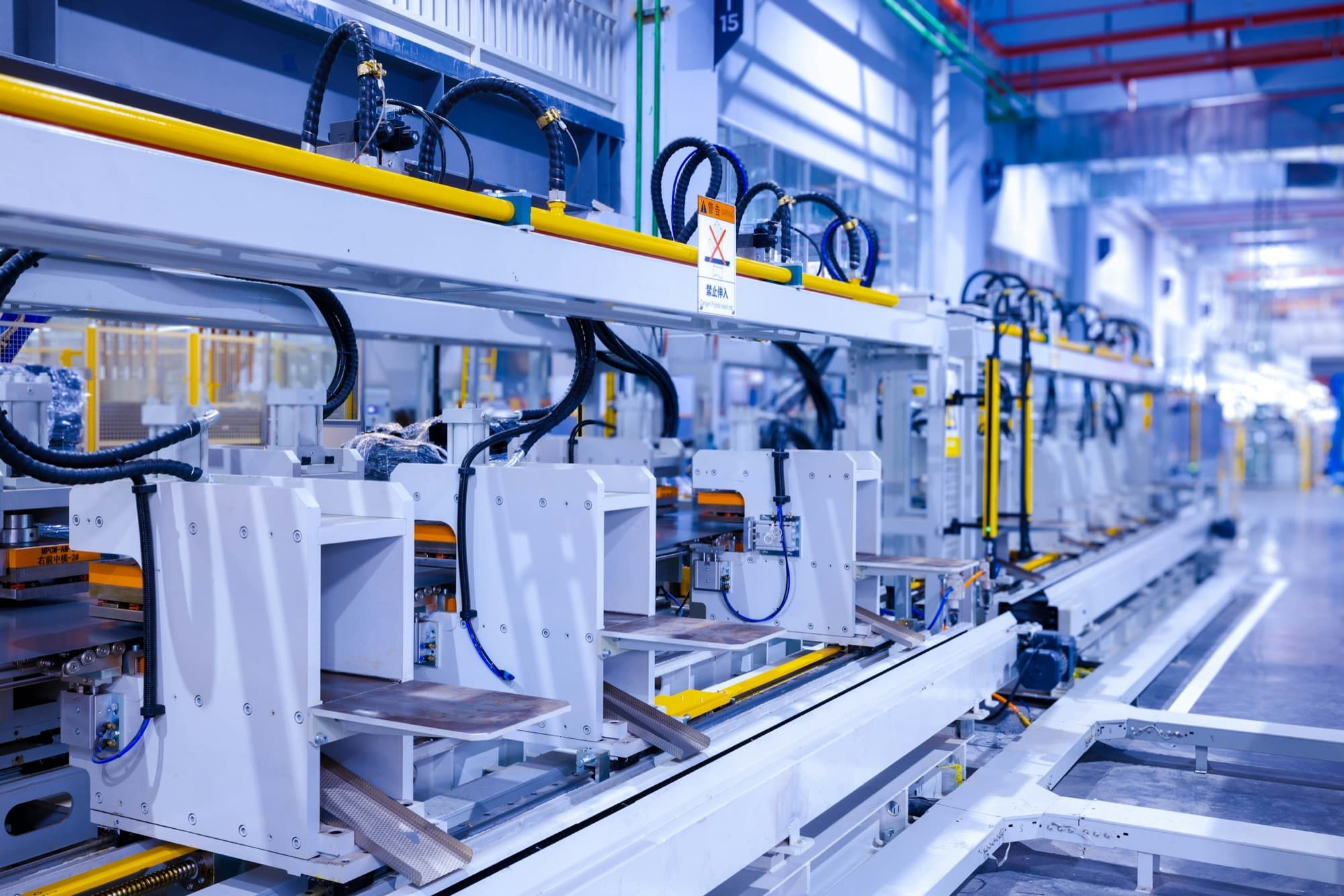
Untooled processes buy flexibility; tooled ones buy a low, repeatable piece price. Most programs move from the first to the second as volume and the design settle.
| Untooled | Tooled | |
|---|---|---|
| Examples | CNC, laser + brake, 3D printing | Molds, dies, forging and PM tools |
| Upfront cost | Programming and fixtures | $1,000 to $250,000+ of tooling |
| First parts | Days to 3 weeks | 3–16 weeks for the tool |
| Price per part | Flat: time on a machine | Falls with volume toward material + cycle |
| Design changes | A new program | Tool rework; costly after steel is cut |
| Part to part | Good, set by the machine | Excellent: the tool sets the shape |
- Examples
- Untooled
- CNC, laser + brake, 3D printing
- Tooled
- Molds, dies, forging and PM tools
- Upfront cost
- Untooled
- Programming and fixtures
- Tooled
- $1,000 to $250,000+ of tooling
- First parts
- Untooled
- Days to 3 weeks
- Tooled
- 3–16 weeks for the tool
- Price per part
- Untooled
- Flat: time on a machine
- Tooled
- Falls with volume toward material + cycle
- Design changes
- Untooled
- A new program
- Tooled
- Tool rework; costly after steel is cut
- Part to part
- Untooled
- Good, set by the machine
- Tooled
- Excellent: the tool sets the shape
Tooling is usually customer-owned: you pay for it once, the principal maintains it. See tooling ownership.
How do blanket POs and releases work?
One PO for the year at the annual price, parts delivered in releases. Set the annual quantity and how often you want parts; the estimator shows what the commitment is worth.
12 releases of 833 parts. Average stock on your shelf: about 417 parts ($644).
- Spot POs, one per release
$3.86$3.86 - per part · Laser cut + press brake
- Quoted on 833 parts at a time
- Blanket PO with releases
$1.55$1.55 - per part · Short-run stamping
- Priced on 10,000 a year
Committing the year saves about
Steel L-bracket, 0.079 in (2 mm) 1008 CRS. Blanket price amortizes tooling over the annual quantity; every release carries its own run setup. Budgetary, from the SSG estimator; freight and carrying cost not included.
What a blanket PO spells out
Price and quantity
The unit price, held for the term (often 12 months), against a stated EAU. Price breaks if volume moves outside a band.Forecast and firm window
A rolling forecast, with the nearest weeks firm. A firm window of 4–8 weeks is common; beyond it, quantities can still move.Material authorization
How far ahead the supplier may buy raw material against the forecast, and your liability for it if the program ends.Releases
Quantities and dates called off against the PO, by email, portal or EDI (830 planning and 862 shipping schedules in automotive).Stock and delivery
Safety stock at the supplier, consignment or kanban, and the Incoterms that set who pays freight. Safety stock
Glossary: blanket PO, MOQ.
What does quality look like at production volume?
At prototype, you inspect parts. At production, you approve the process that makes them, then watch it.
- 01
Approval before first shipmentFAI or PPAP
A first article report for every drawing requirement, or a PPAP submission where the program requires one (Level 3 is the default). See how quality works and PPAP. - 02
Control plan and PFMEA
What is checked, how often, with which gauge, and what happens when a check fails. The PFMEA ranks what can go wrong in the process. - 03
Capability on key characteristicsCpk ≥ 1.33
Statistical process control on the dimensions that matter. 1.33 is the common floor for ongoing capability; initial PPAP studies usually ask for a Ppk of 1.67. - 04
Certs and traceability
Certificates of conformance with each lot, material certs tied to heat or lot numbers, and lot marking when the program needs it. - 05
Change control
No change to material, process, tooling or plant without notice. Most such changes trigger a new PPAP or first article before parts ship. - 06
Corrective action
When parts are wrong: contain, find the root cause, fix the process, prove it. Usually an 8D report against a SCAR.
Principals, not SSG, hold certifications such as ISO 9001 or IATF 16949. Programs that require one route only to principals that hold it. See IATF 16949, first article inspection.
How do you lower the price per part in production?
In rough order of payoff once a part is running. Most need a tooling or drawing change, so they pay best on long-running parts.
- 01
Commit the volume
A blanket PO at annual quantity lets the supplier choose tooling and buy material for the year. The planner above shows the gap. - 02
Add cavities or stations
A 4-cavity mold makes four parts per cycle. A progressive die does in one stroke what stage dies do in several. - 03
Relax what does not matter
Open non-critical tolerances to a general standard such as ISO 2768, and drop cosmetic requirements from hidden faces. - 04
Change the material or the stock
Free-machining 12L14 instead of 1018, a thinner gauge, a cheaper resin that still meets the spec. Each needs requalification. - 05
Combine parts and operations
Two stamped parts and a weld become one formed part; a machined boss becomes a molded one; a family mold runs mating parts together. - 06
Re-source the region
Offshore production can cut the ex-works price; freight, duty and inventory claw some back. See offshore vs domestic and tariffs.
Glossary: cost-down, should-cost, family mold, progressive die.
Questions about production
What is considered low-volume production?
Usually 25 to about 1,000 parts a year, sometimes up to 10,000. At these quantities untooled processes such as CNC machining, laser cutting and 3D printing, or low-cost short-run tooling, usually beat hardened production tooling on total cost.
At what quantity does tooling pay for itself?
Where the tooling cost spread over the order is less than what it saves on every part. For the steel bracket on this page, short-run stamping dies pay back at about 2,100 parts and a progressive die at about 93,000. Your part's size, material and features move the numbers; the builder calculates them.
What is a blanket purchase order?
A single PO that commits to a quantity, usually a year's worth, at a fixed price, with parts delivered in scheduled releases. The supplier prices and tools for the full quantity; you hold less inventory. Releases inside the firm window are binding, and material bought for the forecast is usually your liability if you cancel.
What is EAU?
Estimated annual usage: how many parts you expect to buy in a year. Suppliers use it to choose the process, the tooling and the price break, so state it on every production RFQ even if the first order is smaller.
Do I need PPAP for production parts?
If your customer or industry requires it, yes: automotive programs almost always do, and many industrial OEMs ask for it. PPAP Level 3 is the default. Without a PPAP requirement, a first article inspection and certificates of conformance with each lot are the usual minimum.
Who owns production tooling?
Usually the buyer, who pays for it as a one-time charge and owns it, while the principal stores and maintains it. Normal maintenance is typically the supplier's cost; replacement at end of life is the owner's. Put it in writing on the PO.
Other buying stages and sourcing questions
- Rapid prototypingWhich process fits 1–25 parts?
- Prototype to productionWhen does tooling pay for itself?
- TariffsWhat do tariffs add to the landed cost?
- ReshoringWhat does it take to bring a part back?
- Offshore vs domesticWhere should this part be made?
Production lines SSG represents: injection molding, metal stamping, die casting, screw machining, powdered metal, forging.
Quote it at your annual volume.
Send the drawing with your EAU and release plan. A rep routes it to principals tooled for that volume and brings back firm quotes.