Loading page
PBT (polybutylene terephthalate)
PBT, polybutylene terephthalate, is a semi-crystalline thermoplastic polyester used heavily for electrical connectors, switches and housings. It molds fast, absorbs little moisture, holds dimensions, and has good electrical insulation and solvent resistance. Unfilled PBT runs about 8,000 psi (55 MPa) tensile and melts at about 433 °F (223 °C); 15–30% glass-filled grades are more common for structural parts.
- ISO 1043
- PBT
- ASTM
- D5927 (thermoplastic polyester molding materials)
- Trade names
- Valox, Celanex, Ultradur, Crastin

How does it compare?
Typical room-temperature values for PBT, against all 48 materials in the library.
- Tensile strength
- 55 MPa24th pct
- Density
- 1.31 g/cm³32th pct
- Max service temp
- 120 °C41th pct
- Relative cost
- $$$$$
Bars are relative to the strongest, densest or hottest material in the SSG library. Percentile vs all 48 materials.
- Density
- 1.31 g/cm³ · 0.0473 lb/in³
- Tensile strength
- 55 MPa · 8.0 ksi
- Elastic modulus
- 2.5 GPa · 0.4 Msi
- Max service temperature
- 120 °C · 248 °F
- Melting point
- 223 °C · 433 °F
- Thermal conductivity
- 0.21 W/m·K
When should you use PBT?
Strengths
- Fast cycle times from rapid crystallization
- Low moisture absorption for stable dimensions and electrical properties
- Good dielectric strength and tracking resistance
- Flame-retardant UL 94 V-0 grades common in connectors
- Laser marks well; common for keycaps
Watch for
- Hydrolyzes in hot water and steam unless a hydrolysis-resistant grade is used
- Notch sensitive; low impact strength when unfilled
- Glass-filled grades warp from uneven shrink
- Must be dried before molding to avoid brittle parts
Typical parts
- Electrical connectors and terminal blocks
- Switch and relay housings
- Automotive sensor housings
- Keyboard keycaps
- Lamp sockets and lighting parts
- Appliance handles and knobs
How PBT is made into parts
Cost, finishes and design rules for each process in this material.
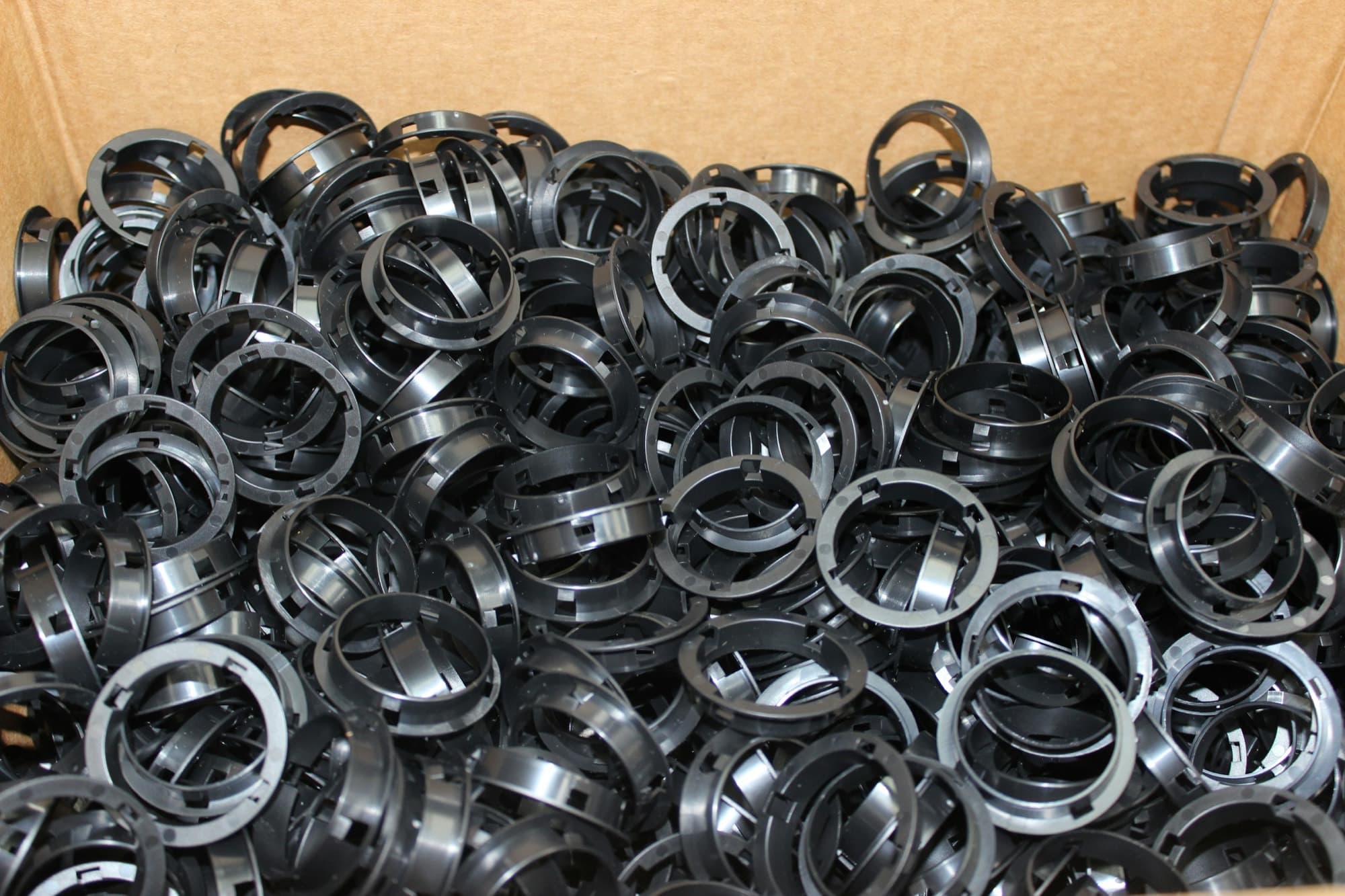

What does a part in PBT cost?
A representative part, injection molding. Raw material at about $3.50/kg is one line of it; process time and tooling usually matter more.
Housing · Injection molding
Order total $25,448
- Tooling
- $17,029
- one-time, spread over the order
- Piece price
- $0.81
- before setup + tooling
- Lead time
- 6–9 weeks
- to first production
Size
Drag a row to adjust · click to type
Length140140 mm
Width90.090.0 mm
Wall2.202.20 mm
Quantity
Price per part falls as volume rises
Exact quantity1000010000 pcs
Material
Design checks pass
Open in builderBudgetary estimate for a representative part. Firm quotes come from principals after drawing review.


PBT questions
PBT vs PET?
Both are thermoplastic polyesters. PBT crystallizes faster, so it molds in cooler tools with shorter cycles and is the usual choice for molded electrical parts. PET is stiffer and cheaper but needs hot molds to crystallize; it dominates bottles and fibers.
PBT vs nylon for connectors?
PBT absorbs far less moisture, so dimensions and electrical properties stay stable. Nylon is tougher, has better fatigue for latches, and handles higher heat. PBT is preferred where humidity or dimensional stability is the concern.
Why are PBT keycaps preferred over ABS?
PBT resists the shine and wear that ABS keycaps develop from skin oils and friction, and it takes dye-sublimation and laser marking well. It is harder to mold flat and costs more.


Quote it in PBT.
Upload CAD or start from a template. The builder prices it in this material and the alternatives.