Loading page
EPDM rubber
EPDM is an ethylene propylene diene rubber known for outstanding resistance to weather, ozone, UV, water and steam. Typical compounds serve from about −60 to 300 °F (−50 to 150 °C) and range from 40 to 90 Shore A. It is the default for outdoor seals, weatherstripping, HVAC and appliance gaskets, and coolant hoses. It swells badly in petroleum oils and fuels; use nitrile there.
- ISO 1629
- EPDM
- ASTM D2000 / SAE J200
- BA, CA or DA classes (e.g., M2CA 710)
- Common name
- EPR, ethylene propylene rubber

How does it compare?
Typical room-temperature values for EPDM, against all 48 materials in the library.
- Tensile strength
- 12 MPa4th pct
- Density
- 1.15 g/cm³17th pct
- Max service temp
- 150 °C55th pct
- Elongation
- 300 %89th pct
- Relative cost
- $$$$$
Bars are relative to the strongest, densest or hottest material in the SSG library. Percentile vs all 48 materials.
- Density
- 1.15 g/cm³ · 0.0415 lb/in³
- Tensile strength
- 12 MPa · 1.7 ksi
- Elongation
- 300%
- Hardness
- Shore 40–90A
- Max service temperature
- 150 °C · 302 °F
When should you use EPDM?
Strengths
- Excellent ozone, UV and weather resistance
- Handles hot water, steam, glycol coolants and brake fluid
- Service from about −60 to 300 °F (−50 to 150 °C) in peroxide-cured grades
- Good electrical insulation
- Low cost; extrudes easily as solid or sponge profiles
Watch for
- Swells and fails in petroleum oils, fuels and hydrocarbon solvents
- Sulfur-cured grades top out near 250 °F (120 °C); specify peroxide cure for heat
- Lower tear and abrasion resistance than natural rubber
Typical parts
- Door and window weatherstripping
- Automotive coolant hoses
- HVAC and appliance gaskets
- Roofing membranes and seals
- Washer and dishwasher seals
- Outdoor enclosure gaskets
How EPDM is made into parts
Cost, finishes and design rules for each process in this material.
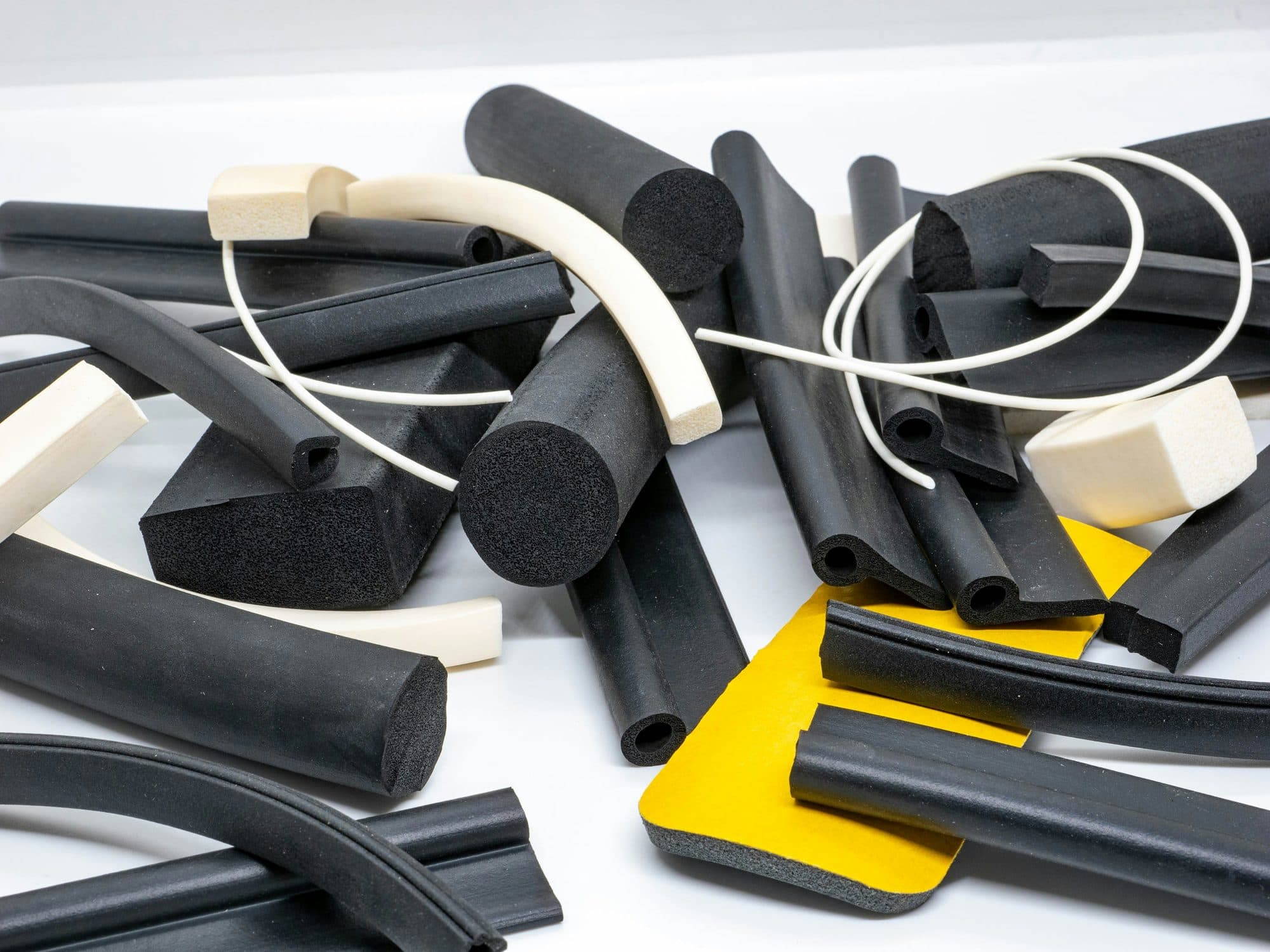

What does a part in EPDM cost?
A representative part, rubber. Raw material at about $5.00/kg is one line of it; process time and tooling usually matter more.
Extruded seal · Rubber
Order total $7,662
- Tooling
- $750
- one-time, spread over the order
- Piece price
- $1.32
- before setup + tooling
- Lead time
- 3–4 weeks
- to first production
Size
Drag a row to adjust · click to type
Profile width / OD12.012.0 mm
Hollow / ID7.007.00 mm
Cut length900900 mm
Quantity
Price per part falls as volume rises
Exact quantity50005000 pcs
Material
EPDM rubber
Design checks pass
Open in builderBudgetary estimate for a representative part. Firm quotes come from principals after drawing review.
EPDM questions
Is EPDM oil resistant?
No. EPDM swells and loses strength in petroleum oils, fuels and most hydrocarbon solvents. Use nitrile (NBR) for oils and fuels, or FKM for hot oils and aggressive fuels. EPDM is fine with water, steam, glycol and glycol-based brake fluid.
EPDM vs silicone?
Silicone covers a wider temperature range, about −75 to 400 °F (−60 to 200 °C), and is cleaner for food and medical use. EPDM is tougher, more tear resistant and cheaper. Use EPDM for outdoor and water service up to about 300 °F (150 °C).
How do I call out EPDM on a drawing?
Use an ASTM D2000 line callout such as M2CA 710: metric units, grade 2, type C (heat aged at 125 °C), class A (no oil swell requirement), 70 Shore A, 10 MPa minimum tensile. Add suffixes for compression set, ozone or low-temperature requirements.
Similar materials


Quote it in EPDM.
Upload CAD or start from a template. The builder prices it in this material and the alternatives.