Loading page
Nitrile rubber (NBR)
Nitrile rubber (NBR), also called Buna-N, is a copolymer of acrylonitrile and butadiene and the most common seal material for petroleum oils, fuels, greases and hydraulic fluids. Standard compounds serve from about −30 to 212 °F (−34 to 100 °C) continuously and range from 40 to 90 Shore A. Higher acrylonitrile content improves oil resistance but reduces low-temperature flexibility.
- ISO 1629
- NBR
- ASTM D2000
- BF, BG or BK classes (e.g., M2BG 714)
- Common name
- Buna-N
- AMS
- AMS-P-25732 (hydraulic O-rings, formerly MIL-P-25732)

How does it compare?
Typical room-temperature values for NBR, against all 48 materials in the library.
- Tensile strength
- 14 MPa9th pct
- Density
- 1.2 g/cm³26th pct
- Max service temp
- 100 °C10th pct
- Elongation
- 300 %89th pct
- Relative cost
- $$$$$
Bars are relative to the strongest, densest or hottest material in the SSG library. Percentile vs all 48 materials.
- Density
- 1.2 g/cm³ · 0.0434 lb/in³
- Tensile strength
- 14 MPa · 2.0 ksi
- Elongation
- 300%
- Hardness
- Shore 40–90A
- Max service temperature
- 100 °C · 212 °F
When should you use NBR?
Strengths
- Excellent resistance to petroleum oils, fuels, greases and hydraulic fluids
- Good abrasion and tear resistance for dynamic seals
- Low cost, with the widest selection of O-ring sizes and compounds
- Good compression set in 70 Shore A O-ring compounds
Watch for
- Poor ozone, UV and weather resistance; cracks outdoors without protection
- Attacked by glycol brake fluid, ketones, esters and chlorinated solvents
- Limited to about 250 °F (121 °C) short term; use HNBR or FKM hotter
Typical parts
- O-rings and hydraulic seals
- Fuel and oil hoses
- Engine and gearbox gaskets
- Pump and valve seals
- Diaphragms and rollers
- Oil-resistant grommets
How NBR is made into parts
Cost, finishes and design rules for each process in this material.
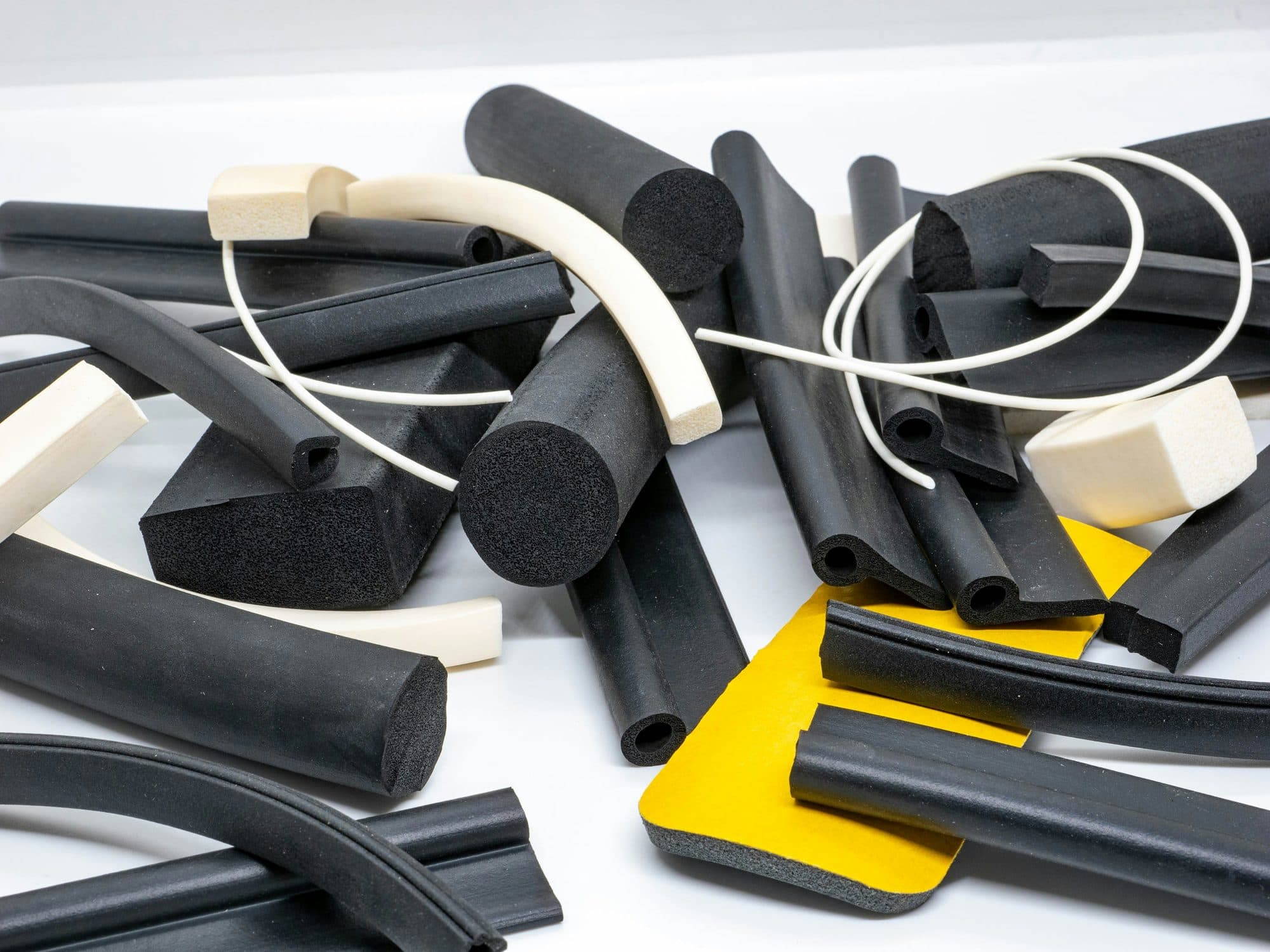
What does a part in NBR cost?
A representative part, rubber. Raw material at about $5.00/kg is one line of it; process time and tooling usually matter more.
Extruded seal · Rubber
Order total $7,810
- Tooling
- $750
- one-time, spread over the order
- Piece price
- $1.35
- before setup + tooling
- Lead time
- 3–4 weeks
- to first production
Size
Drag a row to adjust · click to type
Profile width / OD12.012.0 mm
Hollow / ID7.007.00 mm
Cut length900900 mm
Quantity
Price per part falls as volume rises
Exact quantity50005000 pcs
Material
Design checks pass
Open in builderBudgetary estimate for a representative part. Firm quotes come from principals after drawing review.
NBR questions
NBR vs Viton (FKM)?
FKM handles much higher temperatures, about 400 °F (204 °C) versus 212–250 °F for NBR, and resists aromatic fuels and many chemicals. NBR costs a fraction as much and has better low-temperature flexibility. Use NBR unless heat or chemistry rules it out.
Is nitrile rubber good outdoors?
Not by itself. Ozone and UV crack standard NBR. Use EPDM or neoprene for weather exposure, or specify an ozone-resistant NBR/PVC blend or HNBR if oil resistance is also needed.
What is HNBR?
Hydrogenated nitrile. Saturating the polymer backbone raises heat resistance to about 300 °F (150 °C) and improves ozone and wear resistance while keeping oil resistance. It costs several times standard NBR and is common in automotive belts and oilfield seals.
What durometer should an O-ring be?
70 Shore A is the default for most static and dynamic seals. Use 90 Shore A for high pressure or to resist extrusion, and 50–60 Shore A for low closing force or rough mating surfaces.
Similar materials


Quote it in NBR.
Upload CAD or start from a template. The builder prices it in this material and the alternatives.