Screw machining: multi-spindle vs Swiss vs CNC lathe
SSG MFG engineering5 min readScrew machining
What is the difference between multi-spindle, Swiss, and CNC lathe screw machining?
Multi-spindle screw machines run 4 to 8 spindles at once, finishing a part at every index, and make simple turned parts fastest at volumes above about 50,000. Swiss-type lathes feed bar through a guide bushing and hold ±0.0005 in (±0.013 mm) or tighter on long, slender parts. CNC turret lathes set up fastest and fit lower volumes and larger diameters.
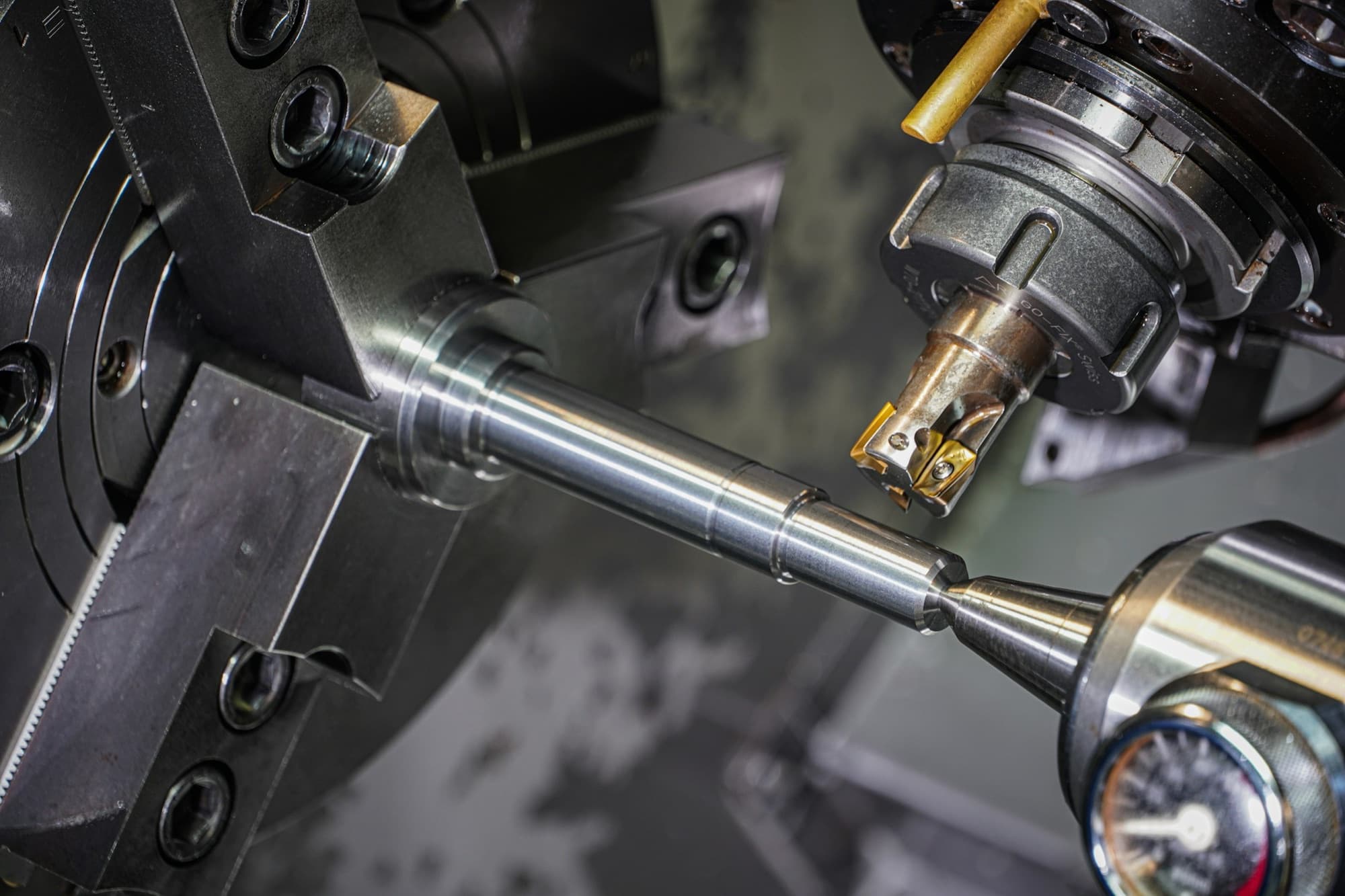

What is a screw machine product?
A screw machine product is a turned part made automatically from bar stock: pins, shafts, bushings, fittings, inserts, spacers, and fasteners. The name comes from early automatic lathes built to make screws. Today the term covers cam-driven multi-spindles, CNC multi-spindles, CNC Swiss-type lathes, and bar-fed CNC turret lathes.
All of them feed bar through the spindle, machine the part, cut it off, and advance the bar for the next one. The differences are how many tools cut at once, how the work is supported, and how long setup takes.
How do multi-spindle, Swiss, and CNC lathes compare?
| Factor | Multi-spindle | Swiss-type CNC | CNC turret lathe |
|---|---|---|---|
| Bar capacity | Up to about 2.5 in (65 mm) | Up to about 1.25 in (32 mm); some larger | About 2–4 in (50–100 mm) bar fed |
| Typical tolerance | ±0.001–0.002 in (±0.025–0.05 mm) | ±0.0002–0.0005 in (±0.005–0.013 mm) | ±0.0005–0.001 in (±0.013–0.025 mm) |
| Best length-to-diameter | Short parts, up to about 3:1 | Long, slender parts, 10:1 and beyond | Up to about 3:1 without tailstock support |
| Setup time | 4–16 hours | 2–6 hours | 1–3 hours |
| Economic volume | About 50,000 to millions | About 1,000 to 500,000 | About 1 to 10,000 |
| Cycle time | Fastest: one part per index | Moderate: part completed in one cycle | Slowest per part |
When is a multi-spindle screw machine the right choice?
A multi-spindle holds 4, 5, 6, or 8 spindles in a rotating drum. Each index moves every bar to the next tool station, so all tools cut at the same time and a finished part drops off at each index. On short, simple parts, that makes cycle times of a few seconds possible.
The cost is setup. Cam machines need cams and tooling laid out for each job, and even CNC multi-spindles take hours to set. Multi-spindles pay off on long runs of stable designs: fittings, hose barbs, inserts, pins, and fasteners at tens of thousands to millions per year.
When should you use Swiss-type machining?
On a Swiss-type lathe the headstock slides, feeding bar through a guide bushing so the tool always cuts close to where the work is supported. That lets it hold tight tolerances on long, thin parts that would deflect on a conventional lathe. Live tools and a sub-spindle can finish milled flats, cross holes, and back-side features in the same cycle.
- Best for: bone screws, pins, shafts, connector contacts, and valve components.
- Bar stock: tight-tolerance jobs often use precision ground bar for a close guide bushing fit.
- Trade-offs: longer bar remnants and higher hourly rates than a basic lathe.
Which materials machine best on screw machines?
| Material | Machinability | Notes |
|---|---|---|
| 12L14 leaded steel | About 160–170 | Lowest cost per part; lead up to 0.35% falls under a RoHS exemption |
| 1215 steel | About 135 | Lead-free free-machining steel |
| 1018 steel | About 70 | Weldable and carburizable |
| 1045 steel | About 55 | Medium carbon; induction hardens |
| 303 stainless | About 45–60 | Free-machining stainless; less corrosion resistant than 304 |
| 304 and 316 stainless | About 35–45 | Work harden; slower speeds and more tool wear |
| Brass C360 | Well above all steels listed | Rated 100 on the copper-alloy scale; fittings and electrical parts |
What tolerances and finishes can screw machining hold?
- Diameters: ±0.0005–0.001 in (±0.013–0.025 mm) in production; ±0.0002 in (±0.005 mm) on Swiss with process control.
- Lengths: ±0.002–0.005 in (±0.05–0.13 mm) typical.
- Surface finish: 32–63 µin Ra (0.8–1.6 µm) as turned.
- Threads: Class 2A/2B is standard; Class 3A/3B costs more.
- Tighter than ±0.0002 in: centerless grinding after turning, typically to about ±0.0001 in (±0.0025 mm).
Put a general tolerance on the drawing, such as ISO 2768-m or a shop-standard ±0.005 in, and call tighter tolerances only on features that fit, seal, or locate.
How do you lower the cost of a screw machine part?
- Design around standard bar sizes and shapes, including hex and square bar for wrench flats.
- Choose a free-machining grade such as 12L14, 1215, 303, or C360 when the application allows.
- Avoid features that need a second operation, such as cross holes or slots, unless the machine has live tooling.
- Allow standard thread reliefs, chamfers, and break-edge callouts instead of sharp corners.
- Order in larger releases. Setup that adds a fraction of a cent across 100,000 parts can add dollars per part on a 500-piece order.
How do you get a turned part quoted?
Upload a STEP file or configure the part in the SSG builder at /build for an instant budgetary estimate and a DFM check on bar size, length-to-diameter ratio, and features that need secondary work. Include material, finish, thread specs, and annual volume. An SSG rep then routes the RFQ to screw machine principals with the right machine type for the part, and returns firm quotes.