How much does an injection mold cost?
SSG MFG engineering6 min readInjection molding
How much does an injection mold cost?
A simple single-cavity aluminum or low-volume steel mold typically costs $5,000–$25,000. A single-cavity P20 production mold runs $15,000–$60,000, and multi-cavity hardened steel tools with hot runners run $50,000–$250,000 or more. Part size, complexity, cavity count, steel, and SPI class drive the price. Amortized over lifetime volume, tooling often adds only cents per part.
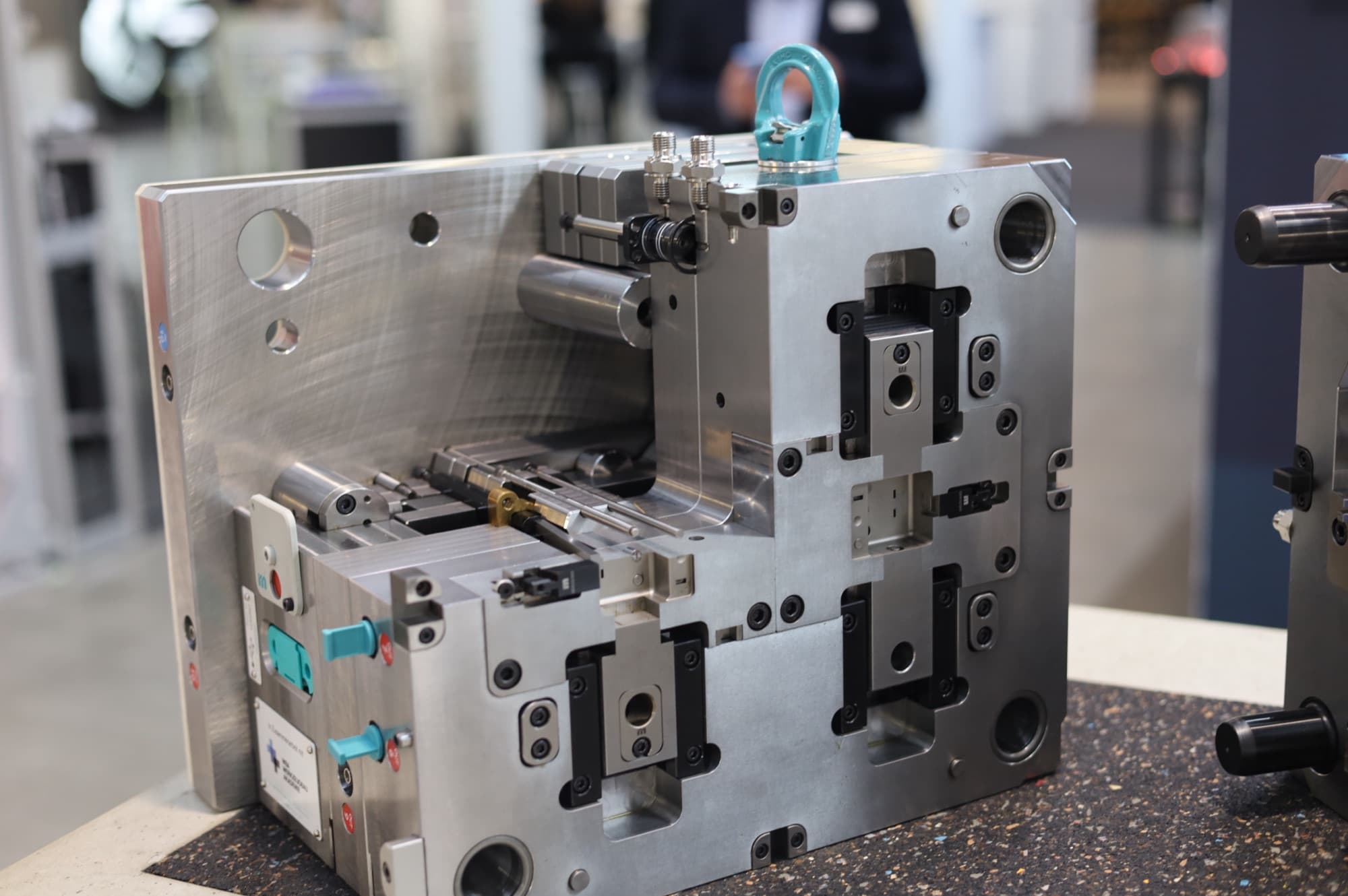

What drives injection mold cost?
- Part size and complexity: a bigger mold base, more machining, and every slide, lifter, or unscrewing core, each of which commonly adds a few thousand dollars.
- Cavitation: more cavities mean more machining, a larger base, and more balancing work.
- Mold steel: hardened steels cost more to buy, machine, and heat treat.
- SPI class and expected life: construction details such as wear plates, guided ejection, and cooling in every insert.
- Runner system: a hot runner adds manifold, nozzles, and a controller.
- Surface finish and texture: an SPI A-1 diamond polish or a chemical texture adds hours.
- Tolerances: tight tolerances mean steel-safe cuts and more sampling iterations.
- Where it is built: offshore tools are often quoted 30–50% below domestic, with trade-offs covered below.
What are SPI mold classes?
The SPI mold classification, now maintained by the Plastics Industry Association, groups molds by expected cycle life and the construction needed to reach it. It is the common language for specifying a tool in an RFQ.
| Class | Expected life | Typical construction | Typical cost range |
|---|---|---|---|
| 101 | 1,000,000+ cycles | Cavities and cores hardened to 48 HRC or more; hardened base components, wear plates, guided ejection | $50,000–$150,000+ |
| 102 | Up to 1,000,000 cycles | Hardened cavities and cores; suited to abrasive resins and tight tolerances | $35,000–$100,000 |
| 103 | Up to 500,000 cycles | Pre-hardened P20 cavities and cores, 28 HRC minimum | $15,000–$60,000 |
| 104 | Up to 100,000 cycles | Mild steel or aluminum; non-abrasive resins | $5,000–$25,000 |
| 105 | Up to 500 cycles | Aluminum, cast metal, or epoxy prototype tooling | $2,000–$10,000 |
Which mold steel should you choose?
| Material | Hardness | Typical life | Best for |
|---|---|---|---|
| Aluminum 7075-T6 | About 150 HB | Roughly 10,000–100,000 shots, more with unfilled resins and care | Prototype, bridge, and low-volume tools; fast cycles from high thermal conductivity |
| P20 | 28–32 HRC, pre-hardened | 250,000–500,000 shots | General-purpose production tools, Class 103 |
| NAK80 | About 40 HRC, pre-hardened | 300,000–500,000+ shots | High-polish cosmetic parts without heat treat distortion |
| H13 | 48–52 HRC, through-hardened | 1,000,000+ shots | Glass-filled and abrasive resins, high-volume Class 101 and 102 tools |
| S7 | 54–58 HRC | 1,000,000+ shots in wear areas | Shutoffs, slides, and inserts that take impact |
| 420 stainless | 48–52 HRC | 1,000,000+ shots | Corrosive resins such as PVC, medical and optical parts, high polish |
Tools often mix materials: a P20 mold with H13 or S7 inserts at gates, shutoffs, and other high-wear spots. That puts the expensive steel only where it earns its cost.
How does cavitation change tool cost and piece price?
Each added cavity makes more parts per cycle, so machine time per part falls almost in proportion. Tool cost rises less than proportionally, because the base, runner, and ejection system are shared.
| Cavities | Relative tool cost | Machine time per part | Typical annual volume |
|---|---|---|---|
| 1 | 1.0× | 1.0× | Under about 50,000, large parts, or launch |
| 2 | About 1.5–1.7× | About 0.5× | 25,000–250,000 |
| 4 | About 2.2–2.8× | About 0.25× | 100,000–1,000,000 |
| 8 | About 3.5–4.5× | About 0.13× | 500,000+ |
| Family mold (different parts) | Varies | One set per cycle | Low-volume kits that ship together |
Hot runner or cold runner: which costs less?
| Factor | Cold runner | Hot runner |
|---|---|---|
| Tool cost | Lower | Higher; commonly adds $5,000–$30,000 or more, depending on drop count |
| Material waste | Runner scrap every shot; regrind may be allowed | Little or none |
| Cycle time | Longer; the runner must cool | Shorter |
| Color and material changes | Fast | Slower; the manifold must be purged |
| Maintenance | Simple | Heaters, thermocouples, and controller to maintain |
| Best for | Low to mid volume, frequent color changes, low-cost resins | High volume, expensive resins, multi-cavity balance, cosmetic valve gating |
How do you amortize mold cost into piece price?
Tool amortization per part is the tool cost divided by the parts it is spread over, usually program life or a set quantity. Buyers typically either pay for tooling separately, often half at PO and half at sample approval, or have it amortized into piece price over an agreed quantity, with a payback clause if volume falls short.
| Cost element | Math | Per part |
|---|---|---|
| Machine time | $70/hr × 30 s cycle ÷ 3,600 ÷ 2 cavities ÷ 85% efficiency | $0.34 |
| Resin | 0.055 lb × 1.10 for runner and scrap × $1.50/lb | $0.09 |
| Tool amortization | $45,000 ÷ 250,000 parts | $0.18 |
| Subtotal | Before secondary operations, packaging, and margin | $0.61 |
At 25,000 parts instead of 250,000, amortization jumps to $1.80 per part and becomes the largest cost. That is the case for an aluminum or single-cavity tool at low volume.
What drives piece price after the mold is built?
- Cycle time: cooling is usually the largest share of the cycle and scales roughly with the square of the thickest wall.
- Part weight and resin price: engineering resins can cost several times commodity resins per pound.
- Press size: clamp force is commonly 2–5 tons per square inch of projected area, depending on resin and wall. Larger presses carry higher hourly rates.
- Scrap rate and regrind rules.
- Secondary operations: inserts, pad printing, ultrasonic welding, and assembly.
- Packaging and automation: bulk pack vs layer pack, and whether a robot or an operator unloads the press.
Should you build the mold domestically or offshore?
Offshore tools are often quoted 30–50% below domestic. The trade-offs are steel verification, sample parts that ship internationally, engineering changes across time zones, the cost and risk of shipping a finished tool, and duty on the tool if it is imported, or on its value as an assist if it stays offshore. Many programs build offshore and run domestically, or the reverse, so write tool ownership and transfer rights into the PO either way.
How do you get an injection mold quoted through SSG?
Upload a STEP file to the builder at /build, choose a resin and quantities, and get an instant budgetary estimate with DFM feedback on the features that drive tool cost. For firm quotes, an SSG rep routes the RFQ to molding principals matched by press size, resin experience, and tool class. Independent reps with molding customers can join the network at /network and submit those jobs.