Loading page
Should I 3D print or injection mold my plastic part?
3D printing is cheaper for prototypes and runs up to a few hundred parts, sometimes about 1,000, because it needs no mold and parts ship in 2–7 days. Injection molding wins above that: a $3,000–$40,000 mold cuts piece price to a fraction of printed parts, with 15–60 second cycles, ±0.005 in (±0.13 mm) tolerances and production resins.
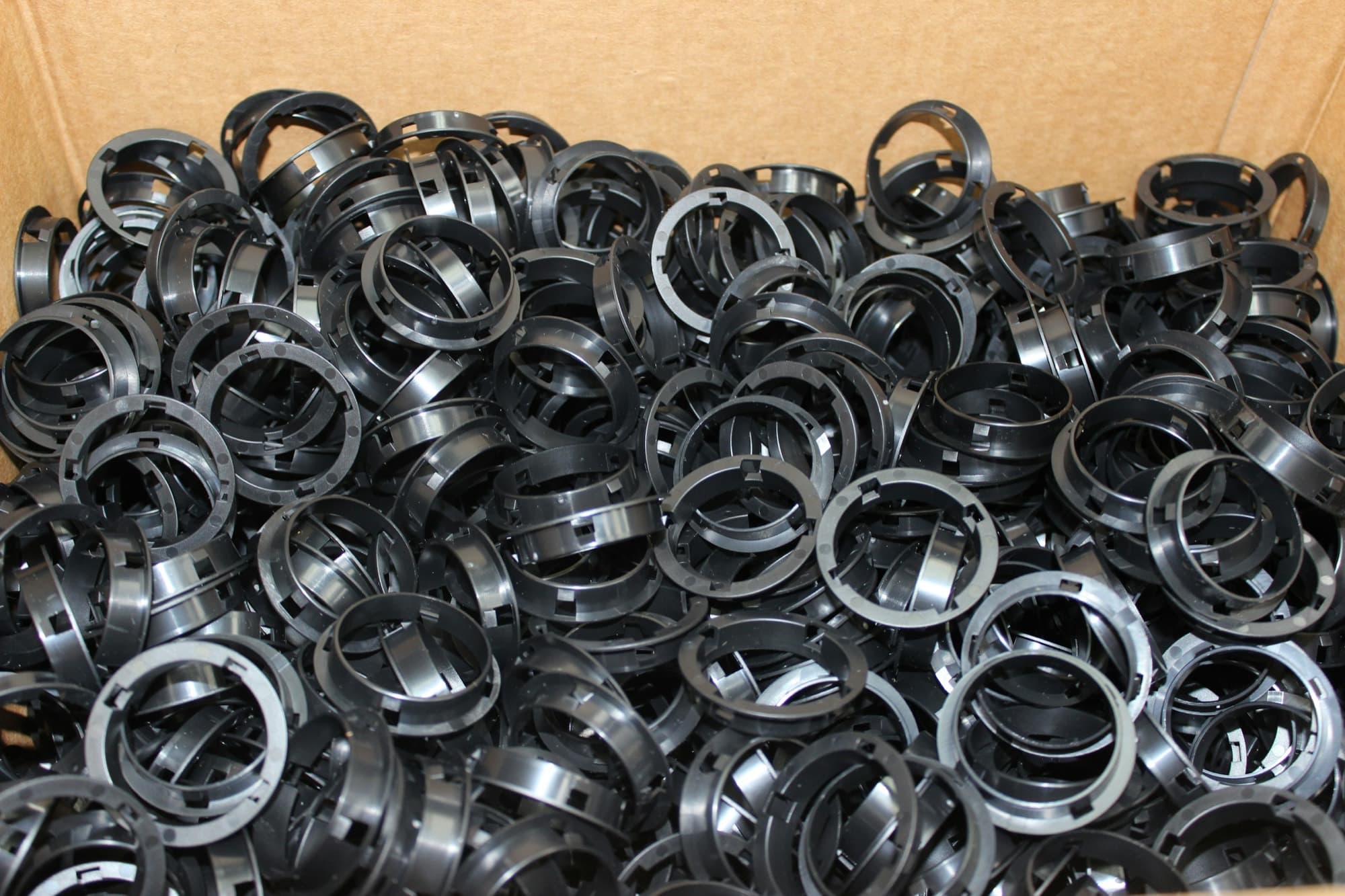
Which is cheaper at your quantity?
The same housing, each process in a suitable material (PC/ABS and PC/ABS).
| Quantity | Injection molding | 3D printing |
|---|---|---|
| 10 | $1,047 | $40.20 |
| 50 | $209 | $35.50 |
| 100 | $105 | $33.70 |
| 500 | $21.50 | $31.70 |
| 1,000 | $11.10 | $31.70 |
| 5,000 | $4.24 | $31.70 |
| 10,000 | $2.50 | $31.70 |
| 50,000 | $1.19 | $31.70 |
| 100,000 | $1.02 | $31.70 |
Where each pays off
Plastic injection molding
1101001k10k100k1M+
- Tooling
- 3–14 weeks
- First article
- 1–2 weeks after tool completion
- Production
- 2–4 weeks per release
±0.005 in (±0.13 mm); ±0.002 in (±0.05 mm) on small critical features
Additive manufacturing
1101001k10k100k1M+
- First article
- 2–7 days for plastic; 1–3 weeks for metal
- Production
- 1–3 weeks per release
SLS/MJF ±0.3% (±0.012 in / ±0.3 mm minimum); SLA about ±0.005 in (±0.13 mm) over the first inch; FDM about ±0.010 in (±0.25 mm)
Which should you pick?
Pick Injection molding when
- Volume is above about 1,000 parts
- The part needs a molded surface, color and texture
- Certification requires the production resin, such as UL or FDA grades
- Tolerances of ±0.005 in (±0.13 mm) must hold part to part
Pick 3D printing when
- You need fewer than a few hundred parts
- The design is still changing
- The part has internal channels, lattices or consolidated assemblies
- Parts are needed in days, or as bridge parts while a mold is built
Key differences
| Injection molding | 3D printing | |
|---|---|---|
| Tooling | $3,000–$15,000 aluminum; $10,000–$40,000 P20 steel | None |
| Time to first part | 3–14 weeks of tooling plus 1–2 weeks of sampling | 2–7 days for plastic |
| Piece price with quantity | Drops sharply once tooling is paid | Nearly flat |
| Tolerance | ±0.005 in (±0.13 mm); ±0.002 in (±0.05 mm) on small critical features | SLS/MJF ±0.3%, minimum ±0.012 in (±0.3 mm); SLA ±0.005 in (±0.13 mm) |
| Surface | SPI A-1 mirror to textured | SLS/MJF Ra 250–500 µin (6–13 µm) as printed |
| Design rules | 1–2° draft, uniform walls, slides for undercuts | No draft; escape holes for hollow parts |
| Materials | Production thermoplastics, including glass-filled and flame-rated grades | PA12, PA11, TPU and SLA resins; some ABS, PC and PEEK filament |
Questions
When should I switch from 3D printing to injection molding?
Usually between a few hundred and a few thousand parts, depending on part size: large parts cross over sooner and small parts later. Stay with printing while the design is changing or for complex internal geometry.
Are 3D printed parts as strong as molded parts?
Close for many uses. SLS and MJF PA12 run about 7,000 psi (48 MPa) tensile, near molded unfilled nylon 12, with near-isotropic strength. FDM parts are weaker between layers, so orientation matters.
Can 3D printing cover parts while the mold is built?
Yes. Printed bridge parts are a common way to ship pilot units during the 3–14 weeks of tool build. Urethane casting is the other bridge option when parts need a molded look.
Try both on your part.
The builder prices the same geometry in every suitable process and material, with DFM for each.