Loading page
Should my part be forged or die cast?
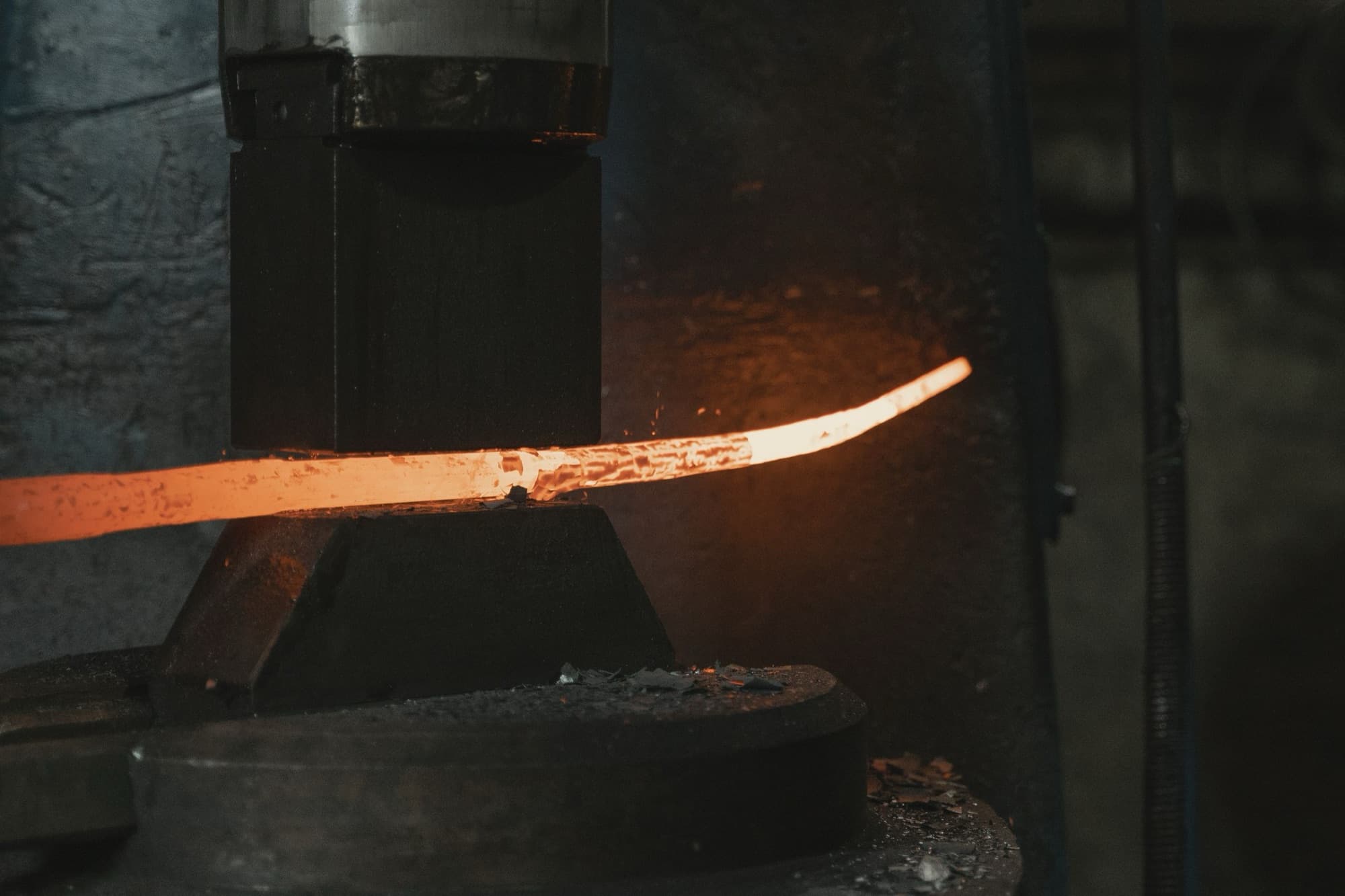
Forge parts that carry high loads, shock or fatigue, such as levers, yokes, hubs and hooks: forging closes voids and aligns grain, so forgings are stronger and tougher than castings of the same alloy, and they come in steel, stainless and titanium. Die cast thin-walled, complex housings and covers in aluminum or zinc, where fine detail matters more than toughness.
Which is cheaper at your quantity?
The same flanged bushing, each process in a suitable material (4140 and A380).
| Quantity | Forging | Die casting |
|---|---|---|
| 10 | $1,014 | $1,275 |
| 50 | $203 | $255 |
| 100 | $102 | $129 |
| 500 | $22.10 | $28.60 |
| 1,000 | $12.00 | $16.00 |
| 5,000 | $4.02 | $5.89 |
| 10,000 | $3.02 | $4.63 |
| 50,000 | $2.21 | $2.18 |
| 100,000 | $2.11 | $1.31 |
Where each pays off
Forging
1101001k10k100k1M+
- Tooling
- 6–12 weeks
- First article
- 2–4 weeks after tooling
- Production
- 4–10 weeks per release, including heat treat and machining
±0.010–0.030 in (±0.25–0.8 mm), plus die wear and mismatch allowances
Zinc and aluminum die casting
1101001k10k100k1M+
- Tooling
- 8–14 weeks
- First article
- 1–3 weeks after die tryout
- Production
- 3–6 weeks per release
±0.002–0.010 in (±0.05–0.25 mm) on the first inch, plus about ±0.001 in per added inch (NADCA precision to standard)
Which should you pick?
Pick Forging when
- The part sees fatigue, shock or impact
- It must be steel, stainless or titanium
- It will be heat treated or welded
- Failure would be safety critical
Pick Die casting when
- The part is a complex housing with thin walls, ribs and bosses
- Near-net shape with little machining matters
- It is a nonferrous part at 5,000–250,000 a year
- Surfaces are cosmetic or plated
Key differences
| Forging | Die casting | |
|---|---|---|
| Alloys | Carbon, alloy and stainless steel; 6061 and 7075 aluminum; titanium | Aluminum A380 and A383; zinc Zamak |
| Internal quality | Dense; grain flow follows the contour | Some gas and shrinkage porosity |
| As-produced tolerance | ±0.010–0.030 in (±0.25–0.8 mm) | ±0.002–0.010 in (±0.05–0.25 mm) on the first inch |
| Draft | 5–7° steel; 1–3° aluminum | 1–2° aluminum; 0.5–1° zinc |
| Machining stock | 0.060–0.125 in (1.5–3.2 mm) per machined surface | 0.010–0.030 in (0.25–0.75 mm) |
| Surface | Ra about 125–250 µin (3.2–6.3 µm) after shot blast | Ra about 32–125 µin (0.8–3.2 µm) |
| Heat treat and welding | Routine, per alloy | Generally neither, because of porosity |
Questions
Are forgings stronger than castings?
Generally, yes. Forging closes internal voids and aligns grain flow with the part shape, giving higher fatigue and impact strength than a casting of the same alloy. Castings win on complex internal shapes and thin walls.
What is the minimum order for forging vs die casting?
Closed-die forgings usually make sense from about 500 parts a year. Die casting typically needs 1,000–2,500 parts a year to pay back a die that costs $10,000–$100,000 or more.
Can a die cast part be converted to a forging?
Only with redesign. Forgings need more draft, 5–7° on steel, webs of at least 0.125–0.250 in (3–6 mm), generous fillets and a simple parting line, so thin-walled cast housings rarely translate directly.
Try both on your part.
The builder prices the same geometry in every suitable process and material, with DFM for each.